
The sudden shakes and anxiety you feel after a carb-heavy meal aren’t a lack of willpower; they’re a specific, fixable timing error in your body’s hormonal signaling.
- Your body is overreacting and releasing too much insulin, causing a “rebound” crash below baseline blood sugar.
- Common habits, like drinking coffee on an empty stomach or eating “healthy” fruit smoothies, can make this insulin misfire significantly worse.
Recommendation: Stop fighting the crashes after they happen. Instead, build a ‘Nutritional Architecture’—a system of eating that strategically combines protein, fat, and fiber—to prevent the hormonal overshoot before it even begins.
That shaky, “hangry” feeling that hits an hour or two after a bagel, a bowl of pasta, or even a “healthy” smoothie is more than just hunger. It’s a jarring, often anxiety-inducing experience known as reactive hypoglycemia. For many, the immediate response is to grab the nearest sugary snack to feel better, which unfortunately only perpetuates a vicious cycle of spikes and crashes. The conventional advice is often a simple and unhelpful “avoid carbs,” which isn’t practical or sustainable for most people.
Many believe this is just how their body works, or worse, a sign of pre-diabetes. While it’s crucial to understand the distinction, reactive hypoglycemia is typically not about insulin resistance (the hallmark of Type 2 diabetes) but rather insulin *oversensitivity*. Your pancreas is doing its job, but a little too enthusiastically, creating a hormonal misfire.
But what if the solution wasn’t just about what you eat, but about *how* and *when* you structure your entire day’s nutrition? The key to stopping these crashes isn’t just about managing food; it’s about re-engineering your personal metabolic environment. This guide moves beyond the generic advice to provide a troubleshooting framework. We’ll explore the specific hormonal cascades causing your symptoms and build a robust nutritional architecture designed to eliminate the crash before it has a chance to start.
This article will break down the precise mechanisms at play, offering both immediate emergency fixes and long-term strategies. By understanding the ‘why’ behind the crash, you can finally implement the ‘how’ to prevent it for good.
Summary: A Strategic Guide to Managing Post-Carb Blood Sugar Crashes
- Why Your Body Panics and Dumps Too Much Insulin After a Bagel?
- How to Build an “Emergency Kit” That Fixes a Crash Without Causing Another?
- Reactive Hypoglycemia vs. Diabetes: What Is the Difference?
- The Coffee Mistake That Makes Your Hypoglycemia 2x Worse
- Which Menu Items Are Safe to Order When You Prone to Crashing?
- Why Your “Healthy” Breakfast Is Causing Your 11 AM Anxiety Spike?
- The Caffeine-Cortisol Loop That Keeps You Anxious All Day
- How to Design a Nutritional Architecture That Eliminates the 3 PM Crash?
Why Your Body Panics and Dumps Too Much Insulin After a Bagel?
When you eat a high-carbohydrate meal like a bagel, your body is designed to release insulin to move the resulting glucose from your blood into your cells for energy. In people with reactive hypoglycemia, this system goes into overdrive. It’s not a failure of the system, but an exaggerated response. Your pancreas, prompted by powerful gut hormones called incretins (like GLP-1), releases a wave of insulin that’s disproportionately large for the amount of carbs consumed.
This “insulin overshoot” efficiently clears the glucose from your blood, but it’s too effective. It continues to work even after the initial glucose is gone, causing your blood sugar to plummet below a normal baseline. This is the crash. Your brain, which relies on a steady supply of glucose, senses this deficit and triggers an alarm: the release of stress hormones like adrenaline and cortisol. This is what causes the classic symptoms of shakiness, sweating, anxiety, and intense hunger. It’s your body’s emergency signal to get glucose levels back up, fast.
The Incretin Overdrive Mechanism
This isn’t just a theory. Clinical research into hypoglycemia after bariatric surgery provides a clear model. Studies show that in these patients, exaggerated GLP-1 secretion leads to similarly exaggerated insulin responses, enough to cause a severe crash. This confirms that an overactive incretin hormone response is a primary driver of the insulin surge, acting like a hormonal misfire that triggers the entire hypoglycemic cascade.

This visual represents the cascading effect of hormones that lead to the excessive insulin response. The body isn’t broken; it’s simply running a normal process with the “volume” turned up too high, leading to a predictable but disruptive crash. Understanding this allows us to shift focus from merely treating the crash to preventing the initial hormonal surge.
How to Build an “Emergency Kit” That Fixes a Crash Without Causing Another?
When a hypoglycemic crash hits, your instinct is to grab anything sweet to stop the shakes. While this provides a temporary fix, it often sets you up for another crash. A proper emergency kit isn’t just about raising your blood sugar; it’s about stabilizing it. The goal is to correct the low without triggering another massive insulin release.
Forget candy bars, cookies, or soda. These are loaded with fructose and fat that slow glucose absorption or contain so much sugar they’ll just restart the cycle. Your emergency kit needs to be precise and strategic. The core component is a source of fast-acting pure glucose (dextrose), like glucose tablets or gels. These are designed for rapid absorption without unnecessary ingredients.
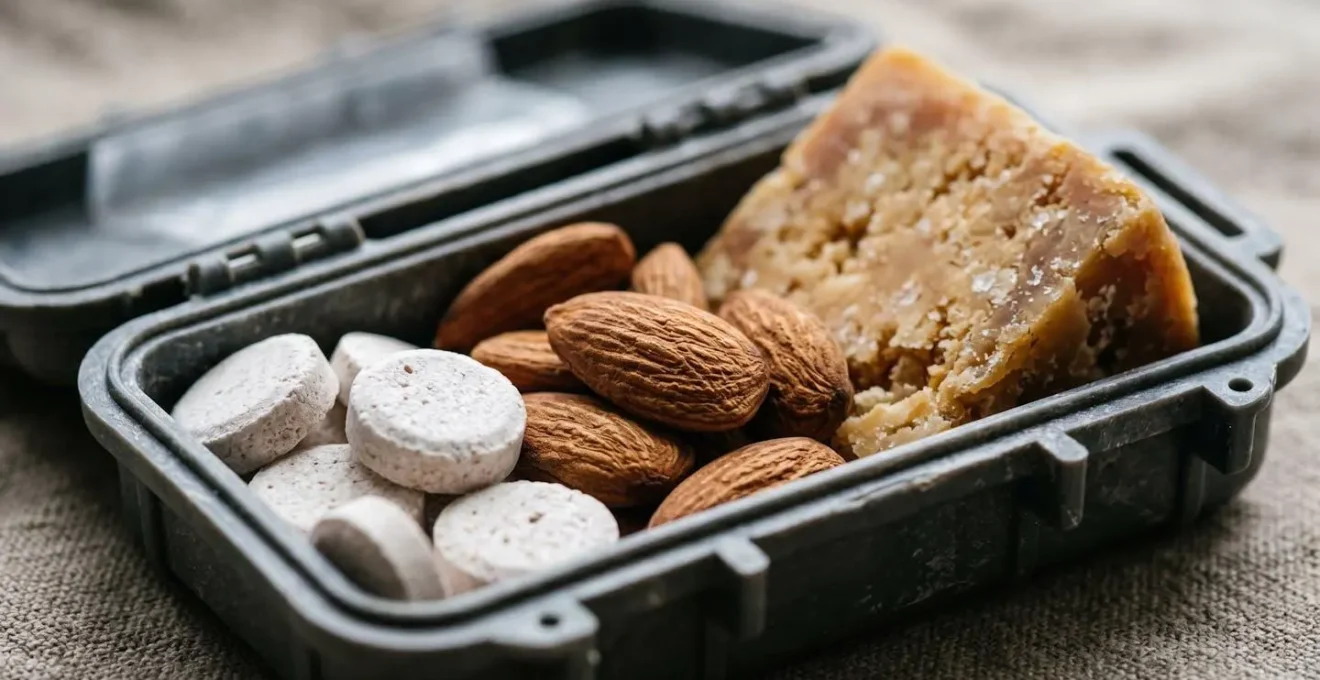
The second, and equally crucial, part of the kit is the “buffer.” Once your immediate symptoms subside and your blood sugar is rising, you must consume a balanced snack containing protein and healthy fat. A cheese stick, a small handful of almonds, or a hard-boiled egg are perfect examples. This nutritional buffer slows down digestion and provides a sustained, gentle release of energy, effectively preventing the rebound crash that a purely carb-based fix would cause.
The standard protocol for managing a low is a great starting point. As a health guideline, the CDC outlines the standard 15-15 Rule. First, you consume 15 grams of fast-acting carbs. Then, you wait 15 minutes and check your symptoms. If they persist, repeat. The most important step for reactive hypoglycemia, however, is what comes next: once stabilized, you must follow it with that protein/fat snack to prevent the next wave.
Reactive Hypoglycemia vs. Diabetes: What Is the Difference?
One of the biggest sources of anxiety surrounding reactive hypoglycemia is the fear that it’s a sign of impending diabetes. While the two conditions involve blood sugar dysregulation, they are fundamentally opposite problems at the cellular level. Understanding this difference is crucial for both peace of mind and proper management.
Type 2 Diabetes is characterized by insulin resistance. The body’s cells become “numb” to insulin’s signal, so glucose can’t get in effectively. This leads to persistently high blood sugar levels (hyperglycemia) because the glucose remains trapped in the bloodstream. The pancreas tries to compensate by producing even more insulin, but eventually, it may get exhausted.
Reactive Hypoglycemia, on the other hand, is often a sign of insulin hyper-sensitivity. Your cells are perfectly, if not overly, responsive to insulin. The issue isn’t resistance; it’s an excessive and poorly timed insulin release that leads to a temporary but sharp drop in blood sugar (hypoglycemia) a few hours after a meal. Fasting blood sugar is typically normal or even on the low side. The problem isn’t a chronic high; it’s extreme volatility.
The following table, based on common clinical diagnostic criteria, breaks down the key distinctions. A medical diagnosis, often using a Continuous Glucose Monitor (CGM) or a Mixed Meal Tolerance Test, is necessary to confirm reactive hypoglycemia, as these tools can reveal the post-meal “valleys” that single blood tests might miss.
| Characteristic | Reactive Hypoglycemia | Type 2 Diabetes |
|---|---|---|
| Primary Issue | Excessive insulin response (hyper-sensitivity) | Insufficient insulin response (resistance) |
| Blood Sugar Pattern | Post-meal crash (valleys 2-4 hours after eating) | Persistently elevated (consistent highs) |
| Fasting Glucose | Normal or low-normal | Elevated (≥126 mg/dL) |
| A1c Test Result | Normal range | Elevated (≥6.5%) |
| Treatment Goal | Stabilize volatility and prevent spikes | Lower consistently high blood sugar |
| Diagnostic Tool | Continuous Glucose Monitor (CGM) or Mixed Meal Tolerance Test | Fasting glucose, A1c, Oral Glucose Tolerance Test |
| Timeline | Symptoms occur 1-4 hours post-meal | Chronic elevation independent of meals |
As this analysis of key diagnostic differences highlights, treatment goals are fundamentally different. For diabetes, the goal is to lower consistently high blood sugar. For reactive hypoglycemia, the goal is to prevent the initial spike and subsequent volatile crash.
The Coffee Mistake That Makes Your Hypoglycemia 2x Worse
You wake up feeling fine, but to get your day started, you reach for a cup of black coffee on an empty stomach. An hour later, you feel jittery, anxious, and oddly hungry, even before you’ve eaten breakfast. This isn’t just the caffeine “kick”; it’s the first step in a hormonal cascade that sets you up for a mid-morning crash.
Here’s the specific mechanism: Caffeine stimulates the release of cortisol and adrenaline, your body’s primary “fight or flight” hormones. These hormones signal your liver to release stored glucose (a process called glycogenolysis) into your bloodstream to prepare you for action. In a person with normal insulin sensitivity, this is a minor event. But in someone with reactive hypoglycemia, this sudden, food-free glucose dump is a major trigger.
Your hypersensitive pancreas detects this rise in blood sugar and, not knowing it didn’t come from food, launches a pre-emptive insulin strike. This insulin release is often excessive, causing your blood sugar to dip just as you’re sitting down to breakfast. You are now starting your day from a glucose deficit, making you more likely to crave quick-energy carbs, which will only amplify the next crash.
The Cortisol-Glucose Cascade on an Empty Stomach
This effect is well-documented in clinical observations. As an analysis from experts on fasting glucose shows, the caffeine in black coffee reliably stimulates this hormonal cascade. The key takeaway is that timing is everything. Consuming that same cup of coffee *after* a protein- and fat-rich breakfast provides a buffer. The food slows digestion and provides a real source of energy for the insulin to work on, blunting the cortisol-driven glucose release and preventing the pre-breakfast crash.
The mistake isn’t necessarily the coffee itself, but drinking it in a “fasted state,” which turns a simple morning ritual into the first domino to fall in a day-long series of blood sugar crashes.
Which Menu Items Are Safe to Order When You Prone to Crashing?
Eating out can feel like navigating a minefield when you’re prone to blood sugar crashes. Menus are often carb-centric, with hidden sugars in sauces and dressings. Simply asking for “no carbs” is rarely a complete solution. A better approach is to adopt a “Deconstruct and Rebuild” strategy, actively designing a safe and stabilizing meal from the menu’s components.
Instead of looking for a “safe” dish, look for safe components. Your goal is to build a plate that prioritizes protein and healthy fats while treating carbohydrates as a small, optional condiment. This approach puts you in control and turns almost any menu (from a steakhouse to a cafe) into a manageable environment.
Here’s how the strategy works in practice, based on principles for healthy eating that can be adapted for this condition:
- Deconstruction Phase: Mentally scan the dish you’re considering and identify all high-carb elements to eliminate or substitute. This includes the obvious (bread, pasta, rice) and the hidden (croutons, breaded coatings, sugary dressings, potatoes in a stew).
- Protein Priority: Your meal’s foundation must be a substantial source of protein. Look for grilled chicken, fish, steak, tofu, or even a shrimp cocktail appetizer as your starting point. Aim for a portion that provides at least 30 grams of protein.
- Fat Addition: Actively request healthy fats to slow down digestion and promote satiety. Ask for olive oil-based dressing on the side, add avocado, or choose dishes that include nuts or seeds. Don’t be afraid of fat; it’s your best friend in preventing a crash.
- Carb-as-Condiment: If you include carbs, they should be the smallest component on your plate. Think of them as a garnish. A few bites of quinoa, a small spoonful of sweet potato, or a single whole-grain cracker with cheese is a reasonable amount.
- Front-Loading Strategy: One of the most effective tactics is to order a simple side salad with oil and vinegar or a broth-based soup and consume it first. This creates a fibrous, “low-and-slow” buffer in your stomach before the main course even arrives.
This systematic approach transforms dining out from a game of chance into a predictable and enjoyable experience. You are no longer a passive victim of the menu but the active architect of your meal.
Why Your “Healthy” Breakfast Is Causing Your 11 AM Anxiety Spike?
You start your day with the best of intentions: a large fruit smoothie, a bowl of instant oatmeal with banana, or a piece of toast with jam. You feel virtuous, but by 11 a.m., you’re irritable, anxious, and desperate for a snack. This frustrating paradox occurs because many “healthy” breakfast foods are metabolic traps, delivering a massive dose of rapidly-digestible carbohydrates with very little to buffer their impact.
The problem isn’t the fruit or the oats themselves, but their form. Blending or juicing fruit pulverizes the natural fiber that would normally slow down sugar absorption. The result is that the fructose and glucose hit your bloodstream with the speed of a can of soda. This triggers the massive insulin overshoot we’ve discussed, leading to the inevitable mid-morning crash and a spike in anxiety-inducing stress hormones.
The Smoothie vs. The Whole Apple
Research into the mechanisms of reactive hypoglycemia makes this clear: the physical form of a carbohydrate can be more important than its source. A whole apple contains fiber that forces you to chew and slows down digestion, resulting in a gradual and manageable glucose rise. That same apple, blended into a smoothie, has its fiber structure obliterated. It becomes a liquid sugar delivery system, causing a glucose surge and subsequent insulin spike that is nearly identical to drinking refined sugar.
This is a more common issue than many realize. In fact, according to a health survey finding that 19-31% of younger adult females experienced symptoms consistent with reactive hypoglycemia after such meals. What feels like a personal failing is actually a widespread physiological response to modern “health” foods. A truly “healthy” breakfast for someone prone to crashes must be built on a foundation of protein and fat (like eggs and avocado, or Greek yogurt with nuts) to ensure sustained energy, not a quick spike and a debilitating fall.
The Caffeine-Cortisol Loop That Keeps You Anxious All Day
The relationship between caffeine and reactive hypoglycemia goes far beyond the morning coffee. For many, it fuels a day-long vicious cycle of anxiety and fatigue. The loop looks like this: you feel tired, so you drink coffee. The caffeine and resulting cortisol spike give you a temporary burst of energy but also trigger an insulin misfire, leading to a mid-day crash. This new wave of fatigue makes you reach for another coffee, which further elevates cortisol, disrupts your sleep architecture, and leaves you even more tired the next day. You’re constantly chasing energy, but you’re only borrowing it from tomorrow.
Breaking this cycle requires a more strategic approach than simply quitting caffeine. It’s about working *with* your body’s natural cortisol rhythm instead of constantly fighting against it. Your cortisol levels are naturally highest in the morning upon waking. Adding caffeine on top of this peak creates an exaggerated stress response. The key is to time your caffeine intake for when cortisol naturally begins to dip.
This means you can still enjoy caffeine, but you must do so strategically to dismantle the anxiety-fatigue loop. It involves conscious timing, smart substitutions, and tools to actively lower cortisol when it becomes problematic.

Your Action Plan: Breaking the Caffeine-Cortisol Cycle
- Cortisol-Aware Timing: Delay your first coffee until at least 90 minutes after waking, ideally between 9:30 AM and 11:30 AM. This is when your natural cortisol peak has passed, and caffeine can provide a smoother lift without the jarring spike.
- Afternoon Substitution: Replace your post-lunch coffee with something that modulates stress without over-stimulating. Green tea is an excellent choice as it contains L-Theanine, an amino acid that promotes calm focus.
- Adaptogen Integration: If you feel wired but tired in the late afternoon, introduce an adaptogen like Ashwagandha tea. Adaptogens help your body regulate its stress response and can actively help lower cortisol levels, breaking the anxiety loop.
- Overnight Reset: Implement a strict caffeine cutoff. Ensure a minimum of 10-12 hours of caffeine abstinence before bed to allow your adenosine receptors (which caffeine blocks) to reset, leading to more restorative sleep.
- Cycle Mapping: For one week, track your energy levels, caffeine intake, and feelings of anxiety. This will give you a clear, personalized map of your vicious loop, making it easier to see the pattern and break it.
Key Takeaways
- Reactive hypoglycemia is an insulin *timing and quantity error*, not a sign of diabetes. Your body is over-sensitive, not resistant.
- The goal is not to eliminate carbs, but to build a “nutritional buffer” with protein, fat, and fiber at every meal to slow digestion and prevent the insulin overshoot.
- Seemingly “healthy” habits like morning coffee on an empty stomach or high-fruit smoothies are often the biggest hidden triggers for crashes.
How to Design a Nutritional Architecture That Eliminates the 3 PM Crash?
We’ve troubleshooted specific triggers like breakfast and coffee, but the ultimate goal is to build a comprehensive system that makes crashes the exception, not the rule. This is your “Nutritional Architecture”—a set of principles for constructing your meals and your day to ensure stable energy. It’s not a restrictive diet, but a blueprint for building metabolic resilience.
The cornerstone of this architecture is prioritizing protein. Protein is not just a building block; it’s a powerful hormonal regulator. As research indicating that 30g of protein at lunch promotes the release of satiety hormones like PYY and GLP-1, which create a feeling of fullness and stability that lasts for hours. This single change can be enough to eliminate the dreaded 3 p.m. slump.
The second principle is what we call the “Carb-as-Condiment” model. This reframes the role of carbohydrates on your plate. Instead of being the foundation (a bed of rice, a large serving of pasta), they become the smallest, most flavorful accent. This allows you to enjoy their taste and texture without overwhelming your system.
Here’s how to translate this architecture to your plate for any meal:
- Plate Foundation (50%): Fill half your plate with non-starchy vegetables. These provide fiber, volume, and micronutrients with minimal impact on blood sugar. Think leafy greens, broccoli, cauliflower, bell peppers, and zucchini.
- Protein Priority (30%): Dedicate a significant portion of your plate to a high-quality protein source. Aim for a minimum of 30 grams from sources like chicken breast, salmon, lean beef, tofu, or eggs.
- Healthy Fats (15%): Add fats to further slow digestion and increase satiety. This can be avocado, a drizzle of olive oil, a handful of nuts, or full-fat dairy like cheese or Greek yogurt.
- Carb Condiment (5%): The final, smallest portion is for complex carbs. This could be a quarter-cup of quinoa, a few small cubes of sweet potato, or a couple of whole-grain crackers.
Finally, a proactive architecture includes a pre-emptive strike. If you know 3 p.m. is your danger zone, don’t wait for hunger to strike. Consume a small, protein-and-fat snack (like a hard-boiled egg or a handful of walnuts) around 2:30 p.m. This isn’t giving in; it’s a strategic move to prevent the desperation that leads to reaching for the office candy bowl.
By understanding that reactive hypoglycemia is a systemic timing issue, you can move from anxiously reacting to crashes to proactively designing a lifestyle that prevents them. Start by implementing one of these architectural changes today to build a foundation for stable, consistent energy.