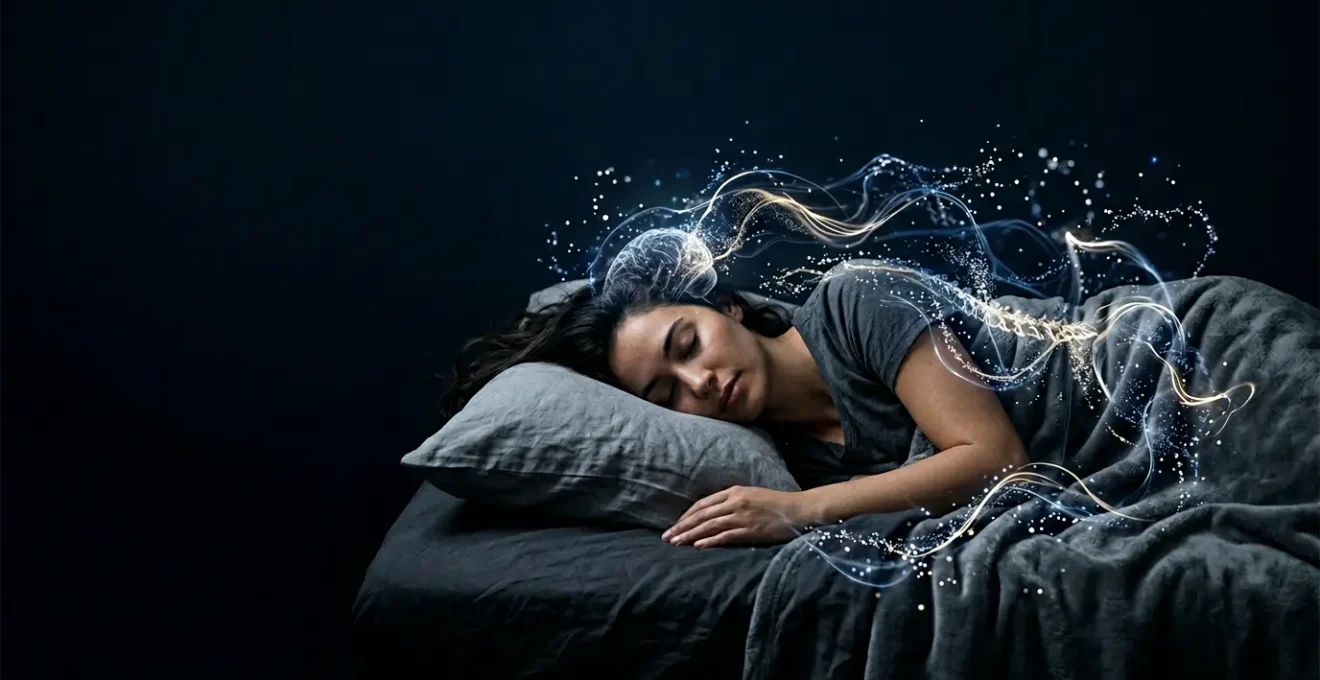
Maximizing deep sleep is not about sleep hygiene; it’s an engineering problem solved by manipulating key physiological triggers to enhance delta wave activity.
- Core body temperature modulation is the most powerful lever, achieved through environmental cooling or heat therapy rebound.
- Even a single alcoholic drink can catastrophically fragment sleep architecture, negating recovery efforts.
- The brain’s waste clearance system is exclusively active during deep sleep, directly linking it to cognitive performance and long-term brain health.
Recommendation: Prioritize implementing a strict pre-sleep temperature protocol—either through a cooling mattress or a timed hot bath/sauna—as your primary intervention for measurable deep sleep improvement.
For high-performers and athletes, the question isn’t whether you’re getting enough sleep; it’s whether you’re getting enough of the *right kind* of sleep. You diligently track your sleep stages, only to be confronted with a frustratingly low “Deep Sleep” percentage. You’ve followed the standard advice—a dark room, no blue light, a consistent schedule—yet the metric barely moves. This data-driven frustration is common because the generic advice fails to address the specific, powerful physiological levers that govern slow-wave sleep (SWS).
The common wisdom treats sleep as a passive recovery state. This is a fundamental misunderstanding. Sleep, particularly deep sleep, is an active and highly targeted biological process. The true key to increasing its duration lies not in general wellness habits, but in understanding and manipulating the precise triggers that initiate and sustain delta wave activity. It’s about moving from a passive “hope for the best” approach to an active, engineering mindset focused on measurable inputs and outputs.
This guide abandons the platitudes. Instead, it focuses on quantifiable interventions. We will dissect the science behind the brain’s nightly cleaning cycle and explore specific, data-backed protocols—from thermoregulation and sound frequency to neurochemical management—designed to systematically increase your deep sleep percentage and unlock superior cellular restoration.
This article provides a structured, data-centric approach to optimizing the most critical phase of your sleep. Below, we’ll explore the core mechanisms and actionable protocols you can implement to see a measurable shift in your deep sleep metrics.
Summary: A Data-Driven Guide to Engineering More Deep Sleep
- Why Your Brain Only Cleans Out Toxins During Deep Sleep?
- How to Use a Cooling Mattress Pad to Hack Deep Sleep Cycles?
- Sauna vs. Hot Bath: Which Heat Therapy Boosts Slow Wave Sleep?
- The “Nightcap” Trap: How One Drink Erases 40% of Deep Sleep
- Which Pink Noise Frequency Best Induces Delta Waves?
- Why a 3-Minute Cold Shower Triggers Cellular Renewal?
- Airplane Mode vs. Do Not Disturb: Which One Actually Stops the Noise?
- How to Sharpen Mental Acuity for Complex Problem Solving After 50?
Why Your Brain Only Cleans Out Toxins During Deep Sleep?
Deep sleep is not merely a state of rest; it is an active, essential maintenance period for the brain. The primary mechanism at play is the glymphatic system, a waste clearance pathway that functions almost exclusively during slow-wave sleep. During wakefulness, the brain’s metabolic activity produces toxic byproducts, including amyloid-beta, the protein famously associated with Alzheimer’s disease. These toxins accumulate throughout the day, and the glymphatic system is the brain’s dedicated sanitation crew tasked with their removal.
For this process to occur efficiently, a remarkable physiological change must happen. During deep sleep, brain cells temporarily shrink, creating more space between them. This expansion of the interstitial space allows cerebrospinal fluid (CSF) to flow more freely, washing away the accumulated metabolic waste. In fact, research shows that brain cells can shrink by up to 60% to facilitate this crucial clearance process. Without sufficient deep sleep, this system operates inefficiently, leading to the buildup of neurotoxins.
This nightly cleaning cycle has profound implications for cognitive function. Insufficient glymphatic clearance is linked to next-day “brain fog,” reduced mental acuity, and impaired memory consolidation. For athletes, this translates to slower reaction times and poor decision-making. For executives, it means diminished problem-solving capacity. Therefore, maximizing deep sleep is not a luxury; it is a non-negotiable biological imperative for maintaining peak cognitive performance and long-term brain health.
Understanding this mechanism reframes the pursuit of deep sleep from a simple desire for rest to a critical strategy for neurological maintenance.
How to Use a Cooling Mattress Pad to Hack Deep Sleep Cycles?
One of the most powerful and reliable signals for initiating and maintaining deep sleep is a drop in core body temperature. The body’s circadian rhythm naturally orchestrates a slight temperature decrease in the evening to facilitate sleep onset. However, for a data-driven individual seeking to optimize SWS, passively waiting for this to happen is inefficient. Actively managing your thermal environment is a direct hack into this physiological process.
The required change is surprisingly small; research indicates that a core body temperature drop of just 1-2°F (0.5-1°C) is a potent trigger for the brain to enter and sustain deep sleep. While a cool room helps, it often isn’t enough to influence core temperature directly. A cooling mattress pad offers a far more targeted and effective intervention by creating a consistent thermal gradient that pulls heat away from the body throughout the night. This isn’t about feeling cold; it’s about providing a precise signal to the body’s internal thermostat.
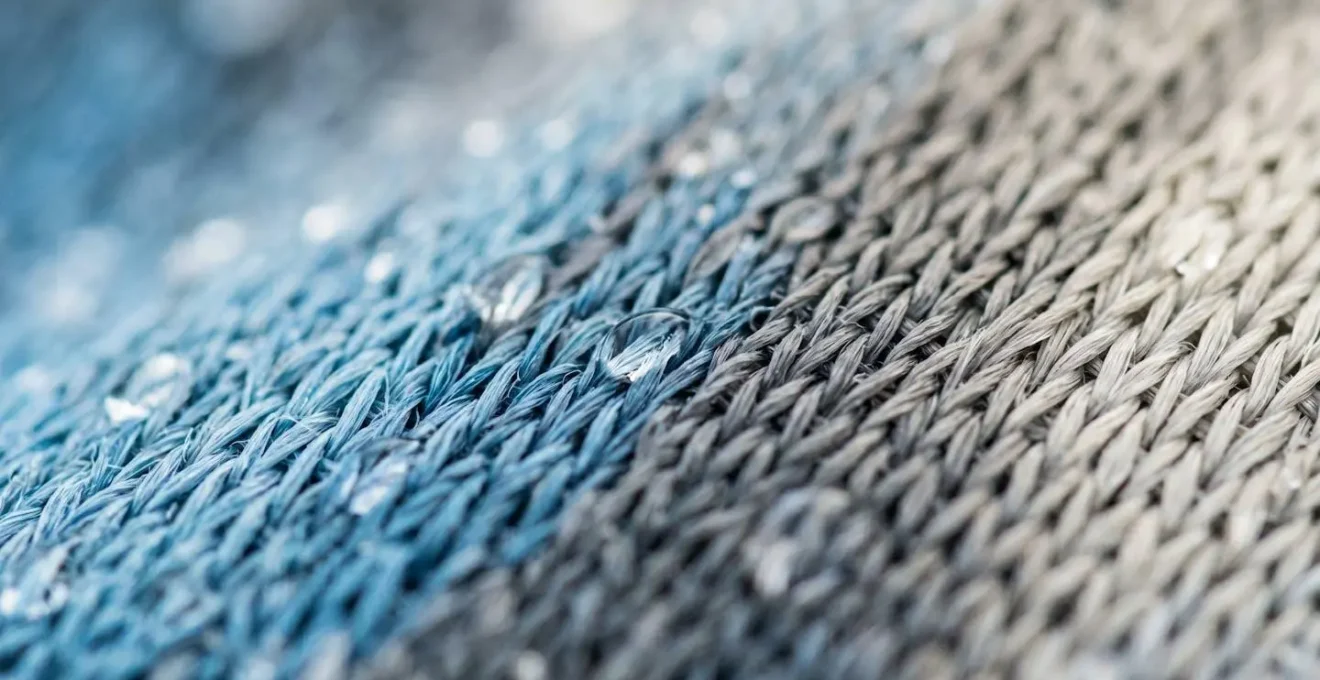
The effectiveness of this technology is not theoretical. It has been validated in controlled studies, providing a clear protocol for those looking to engineer better sleep architecture.
Case Study: The Quantifiable Impact of a Temperature-Controlled Mattress
A 2024 study involving 54 participants demonstrated the significant impact of using a temperature-controlled mattress cover. Men who slept at cooler temperatures during the first half of the night saw their deep sleep increase by an average of 14 minutes, a 22% mean change. The study also noted significant improvements in Heart Rate Variability (HRV) and overall cardiovascular recovery, key metrics for any serious athlete. This provides clear, quantitative evidence that direct temperature manipulation is a high-leverage tool for sleep optimization.
By shifting focus from ambient room temperature to direct body-contact cooling, you move from a passive environmental setting to an active, results-oriented sleep protocol.
Sauna vs. Hot Bath: Which Heat Therapy Boosts Slow Wave Sleep?
While cooling the body is the direct trigger for deep sleep, a paradoxical intervention—heat therapy—can be an even more powerful tool when timed correctly. The strategy isn’t to sleep hot; it’s to leverage the body’s powerful homeostatic response. Exposing the body to heat via a sauna or hot bath forces it to initiate an aggressive cooling process to return to its normal temperature. When this “rebound” cooling effect is timed to coincide with your bedtime, it significantly amplifies the natural drop in core body temperature, effectively trickling the brain into initiating SWS.
The choice between a sauna and a hot bath depends on the desired intensity and mechanism. A hot bath (or shower) works primarily through conduction, transferring heat directly to the skin. A sauna, particularly an infrared sauna, uses radiant heat to penetrate deeper into the muscle tissue, potentially triggering a more robust physiological response. Both are effective, but the key is the timing: the heat exposure should end 60 to 90 minutes before bed to allow the peak of the cooling rebound to align with your sleep onset.
This principle of temperature manipulation is one of the most reliable methods for influencing sleep architecture. As sleep science expert Dr. Matthew Walker explains, the effect is both rapid and significant.
When they dropped the core body temperature, they were able to induce sleep quicker, and the amount of deep sleep increased somewhere between about 10% to 20%.
– Dr. Matthew Walker, Interview on sleep and temperature regulation
Ultimately, both methods serve the same strategic purpose: to create a sharp decline in core body temperature. The best choice is the one you can implement consistently as part of a non-negotiable pre-sleep protocol.
The “Nightcap” Trap: How One Drink Erases 40% of Deep Sleep
Among all the variables that can be manipulated to improve sleep, alcohol is perhaps the most deceptive and destructive. The common perception of alcohol as a sleep aid—the classic “nightcap”—is a dangerous myth for anyone serious about recovery. While alcohol is a sedative and can reduce sleep latency (the time it takes to fall asleep), this initial benefit comes at a catastrophic cost to your sleep architecture.
Alcohol metabolism produces aldehydes, which are toxic compounds that block the brain’s ability to produce adenosine and enter deep sleep. More critically, as the alcohol is processed and its sedative effects wear off, the body experiences a “glutamate rebound.” Glutamate is an excitatory neurotransmitter, and this rebound surge in the second half of the night leads to a highly fragmented, shallow sleep state, characterized by frequent micro-arousals. The result is a dramatic suppression of both REM and deep sleep. For a high-performer, a single drink can effectively erase up to 40% of deep sleep, completely negating a day’s worth of training and recovery efforts.
For the data-driven individual, the verdict from sleep trackers is unequivocal: alcohol consumption is directly correlated with a spike in resting heart rate, a crash in HRV, and a decimated SWS score. Mitigating this requires a strict protocol. The most effective strategy is total avoidance, but if that is not feasible, a harm reduction approach involves creating a buffer zone of at least 3-4 hours between your last drink and bedtime. To replace the ritual without the physiological damage, functional mocktails can provide relaxation signals without fragmenting sleep.
Your Action Plan: Mitigating Sleep Disruptors
- Identify Disruptors: List all potential evening disruptors: alcohol, caffeine, late-night meals, and high-intensity screen time. Be specific with timing and quantity.
- Collect Baseline Data: For one week, inventory your exact pre-sleep routine and its timing. Correlate this with your deep sleep, HRV, and resting heart rate data.
- Audit for Consistency: Confront your routine with evidence-based rules. Are you adhering to the 3-4 hour buffer for alcohol? Is caffeine consumed after 2 PM?
- Test & Measure Impact: Systematically remove a single variable for 5-7 days. Start with alcohol. Meticulously track your sleep metrics to quantify the impact of its absence.
- Integrate Successful Protocols: If a change (e.g., no alcohol after 6 PM) leads to a demonstrable improvement in your metrics, codify it as a non-negotiable part of your permanent sleep protocol.
The choice is stark: you can have a nightcap, or you can have optimal recovery. For a performance-oriented individual, they are mutually exclusive.
Which Pink Noise Frequency Best Induces Delta Waves?
While a quiet environment is the baseline for good sleep, the concept of “acoustic darkness” can be taken a step further. Just as the absence of light is crucial, the right kind of sound can actively guide the brain into deeper states of sleep. This is where sound masking and neural entrainment come into play. The most promising tool in this domain for SWS enhancement is pink noise.
Unlike white noise, where energy is distributed equally across all frequencies, pink noise has more power in the lower frequency bands. Its sound is deeper and more akin to a steady waterfall or wind. The key to its effectiveness lies in its ability to both mask high-frequency, disruptive sounds (like a door slamming) and, more importantly, to entrain brainwaves. The steady, low-frequency rhythm of pink noise can help synchronize the brain’s own neural oscillations, encouraging the transition into the slow, powerful delta waves (0.5-4 Hz) that define deep sleep.

The optimal frequency is not a single number but a spectrum. True pink noise is defined by its power density decreasing by 3 decibels per octave. The goal isn’t to find a “magic” frequency but to use a high-quality, continuous pink noise source that maintains this specific power-law relationship. This consistency is crucial; intermittent or poorly generated noise can be more disruptive than silence. For athletes and performers, using a dedicated sound machine or app that generates pure pink noise can be a simple yet effective protocol to stabilize the sleep environment and promote the brainwave patterns necessary for restorative deep sleep.
By treating the auditory environment as a system to be engineered rather than a variable to be ignored, you add another powerful tool to your sleep optimization toolkit.
Why a 3-Minute Cold Shower Triggers Cellular Renewal?
The practice of cold exposure, such as a brief cold shower, extends beyond the well-known benefits for reducing inflammation. It acts as a powerful hormetic stressor—a beneficial, low-dose stress that stimulates the body’s adaptive and repair mechanisms. One of the most significant downstream effects of this controlled stress is the triggering of processes related to cellular renewal and improved metabolic efficiency, which are intrinsically linked to the quality of deep sleep.
A 3-minute cold shower initiates a cascade of physiological responses. It causes a sharp release of norepinephrine, a hormone and neurotransmitter that enhances focus and alertness but also plays a role in upregulating metabolic processes. This brief, intense cold exposure can increase the density and activity of brown adipose tissue (BAT), or “brown fat,” which is metabolically active and helps regulate body temperature. A more efficient thermoregulatory system is better able to execute the core body temperature drop required for deep sleep onset.
Furthermore, the systemic shock of cold water triggers antioxidant and cellular clean-up pathways, including autophagy. While this process is not the same as the glymphatic clearance in the brain, it is part of the same overarching theme of cellular maintenance and repair. By priming these systems during the day, you are essentially improving the efficiency of the machinery that will be running at full capacity during your restorative deep sleep phase. For a high-performer, this means you are not just recovering from yesterday’s workout, but actively building a more resilient system for tomorrow’s performance. The goal of all these interventions is to maximize that crucial phase of sleep, and sleep experts recommend that deep sleep should constitute 20-25% of total sleep for optimal restoration.
Integrating a short, intense cold exposure into your daily routine is a low-investment, high-return protocol for enhancing the very cellular mechanisms that deep sleep is designed to optimize.
Airplane Mode vs. Do Not Disturb: Which One Actually Stops the Noise?
In the quest for an optimized sleep environment, eliminating auditory and visual disturbances is fundamental. Modern smartphones present a significant challenge, but they also offer built-in tools to manage these disruptions. The two primary options, “Do Not Disturb” (DND) and “Airplane Mode,” are often used interchangeably, but from a data-driven optimization perspective, they serve fundamentally different purposes and have vastly different impacts on your sleep environment.
Do Not Disturb (DND) is a software-based filter. Its function is to silence notifications, calls, and alerts. You can customize it to allow calls from specific contacts or to permit repeat callers to break through, but its core purpose is to prevent the phone from making audible or vibratory noise. However, DND does nothing to stop the phone’s hardware from functioning. The Wi-Fi, Bluetooth, and cellular radios remain active, constantly sending and receiving data. The screen may still light up with certain notifications, creating light pollution.
Airplane Mode, on the other hand, is a hardware-level disconnector. Activating it disables all of the device’s wireless transmission radios: cellular (for calls and data), Wi-Fi, and Bluetooth. It effectively turns your smartphone into a small, non-connected computer. This is the only way to guarantee a complete cessation of all potential notifications and, more importantly, to eliminate all radio-frequency (RF) emissions. While the scientific consensus on the direct impact of non-ionizing RF radiation on sleep is still developing, for a high-performer seeking to eliminate every possible variable, it’s a logical step. Only Airplane Mode ensures true electromagnetic and notification silence.
Therefore, the protocol is clear: Do Not Disturb is a social filter; Airplane Mode is an environmental control. For optimal sleep, engage Airplane Mode as the final, non-negotiable step of your pre-sleep routine.
Key Takeaways
- Deep sleep is an active neurological process, not passive rest; its primary function is the glymphatic clearance of metabolic waste from the brain.
- Manipulating core body temperature via cooling technologies or timed heat therapy is the most effective, data-supported strategy for increasing deep sleep percentage.
- Alcohol is the single most destructive agent to sleep architecture, and its consumption should be viewed as a direct trade-off against physical and cognitive recovery.
How to Sharpen Mental Acuity for Complex Problem Solving After 50?
For individuals over 50, maintaining high-level cognitive function and the ability to engage in complex problem-solving is a top priority. While cognitive decline is often seen as an inevitable part of aging, a significant portion of this decline is directly linked to a measurable and modifiable physiological factor: the age-related reduction in deep sleep. This understanding shifts the conversation from passive acceptance to active, strategic intervention.
The data is stark: research shows we lose deep sleep at a rate of about 10-12 minutes per decade starting in our 30s. This isn’t just a change in sleep patterns; it’s a direct reduction in the brain’s nightly maintenance window. As we’ve established, the glymphatic system’s waste clearance function is most active during SWS. A decline in deep sleep duration means a progressive decline in the efficiency of this cleaning process, leading to a gradual accumulation of neurotoxins that can impair neural signaling and cognitive flexibility.

This link between sleep, waste clearance, and age-related cognitive function is no longer theoretical. Modern neuroimaging studies provide direct evidence of this connection, highlighting the physical mechanism by which poor sleep impacts brain health and performance.
Case Study: The Neurophysiological Link Between Glymphatic Function and Memory
A 2024 study in Molecular Psychiatry analyzed 72 older adults and found a direct correlation between poor sleep quality and reduced glymphatic functioning. Crucially, the study showed that the efficiency of this waste clearance system was associated with the structural and functional connectivity of brain networks in regions critical for memory, such as the parahippocampal gyrus. This demonstrates a direct neurophysiological pathway: better sleep leads to more efficient brain cleaning, which in turn supports the brain structures required for sharp memory and cognitive acuity.
The battle against age-related cognitive decline is not fought with brain games or supplements alone; it is won, night after night, in the restorative depths of slow-wave sleep. Implementing a rigorous sleep optimization protocol is the most powerful investment you can make in your long-term cognitive capital.