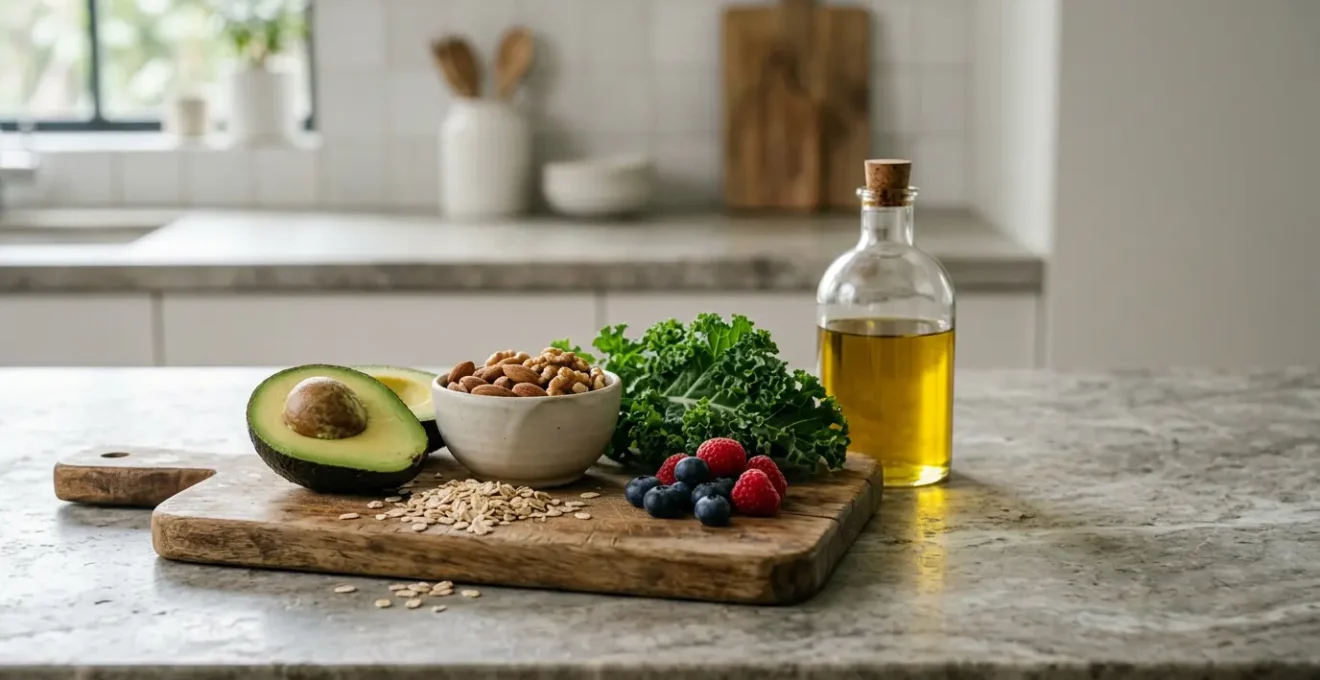
Lowering cholesterol isn’t about avoiding fat; it’s about fixing the underlying metabolic issues, like inflammation, that cause your body to overproduce it in the first place.
- Chronic inflammation, not dietary cholesterol, is a primary driver of high LDL, as your body uses cholesterol as a repair molecule.
- The type of LDL particle (small, dense) and your ApoB count are far better risk predictors than your total LDL-C number.
Recommendation: Focus on a portfolio of specific, cholesterol-binding foods and managing glucose spikes to improve arterial health from the inside out, empowering a more nuanced conversation with your doctor.
Receiving a high cholesterol diagnosis often comes with a sinking feeling, followed by the predictable, yet dreaded, dietary prescription: cut out the fat. Visions of bland, joyless meals dance in your head—no more rich olive oil, creamy avocados, or satisfying nuts. For years, the prevailing wisdom has been a war on dietary fat and cholesterol, forcing a choice between heart health and a diet you actually enjoy. This “old playbook” has led many to believe that lowering cholesterol requires drastic and often unsustainable restrictions.
But what if this entire framework is outdated? What if cholesterol isn’t the villain we’ve made it out to be, but rather a vital response signal from our body? The latest science invites us to look beyond the simplistic “good vs. bad” narrative. Instead of just trying to slash cholesterol numbers by any means necessary, a more effective approach is to ask a better question: why is my body producing so much cholesterol in the first place? The answer often lies not on your plate, but within the complex metabolic machinery of your body, particularly in the realms of inflammation and insulin sensitivity.
This guide offers a new perspective. It’s for those who want to take control of their heart health without sacrificing the delicious, healthy fats that are crucial for overall well-being. We will deconstruct the powerful link between inflammation and cholesterol production, explore the dietary strategies that work with your body’s biology, and introduce the advanced markers that give a truer picture of your cardiovascular risk. It’s time to move from a mindset of restriction to one of strategic, delicious empowerment.
This article provides a detailed roadmap for understanding and managing your cholesterol through a food-first, science-backed lens. Below is a summary of the key areas we will explore to help you build a sustainable and enjoyable heart-healthy lifestyle.
Summary: A Modern Guide to Managing Cholesterol Without Fear of Fat
- Why Your Body Produces More Cholesterol When You Are Inflamed?
- How to Implement the “Portfolio Diet” to Drop LDL by 20%?
- Large Fluffy vs. Small Dense: Which LDL Particles Should You Fear?
- The CoQ10 Depletion: Why Statins Cause Muscle Pain in Some Users?
- Which 3 Soluble Fiber Sources Bind Cholesterol Best in the Gut?
- ApoB vs. LDL: Which Marker Actually Predicts Your Heart Attack Risk?
- The Invisible Damage High Insulin Does to Your Arteries Before Diagnosis
- How to Regulate Glucose Spikes Without Giving Up Carbs Entirely?
Why Your Body Produces More Cholesterol When You Are Inflamed?
The first step in rethinking cholesterol is to reframe its role. For decades, we’ve viewed it as a malevolent substance that clogs arteries. However, a more accurate analogy is to see cholesterol as a firefighter and inflammation as the fire. When your arterial walls are damaged by chronic inflammation, your liver dispatches LDL cholesterol as a biological repair crew. The cholesterol acts as a patch, or a spackle, to heal the damaged endothelial lining. The problem isn’t the cholesterol itself, but the persistent, underlying fire that keeps calling the repair crew into action. When the “spackle” builds up excessively, it forms the plaque we associate with atherosclerosis.

This crucial link between inflammation and cardiovascular events is not just a theory. A landmark 30-year study confirmed that individuals with higher levels of inflammation had a significantly greater risk of heart attacks and strokes, independent of their cholesterol levels. In fact, a major 2024 analysis of statin-intolerant patients revealed that high-sensitivity C-reactive protein (hs-CRP), a key marker of inflammation, was a stronger predictor of cardiovascular risk than LDL cholesterol itself. This reinforces the idea that managing cholesterol effectively starts with quenching the inflammatory fires through diet and lifestyle, rather than just trying to block the production of the “firefighters.”
This shift in perspective is empowering. It means you can directly influence your cholesterol by focusing on an anti-inflammatory diet rich in antioxidants from colorful plants, omega-3 fatty acids from fish, and, yes, healthy monounsaturated fats from olive oil and avocados. It changes the goal from simply “lowering cholesterol” to creating a low-inflammation environment where your body no longer needs to send out an endless stream of cholesterol for repairs. This is the foundation of a modern, sustainable approach to heart health.
How to Implement the “Portfolio Diet” to Drop LDL by 20%?
Once you understand that managing cholesterol involves more than just cutting fat, you can adopt proactive, food-based strategies. One of the most scientifically validated approaches is the “Portfolio Diet.” This isn’t a restrictive diet in the traditional sense, but rather a strategic combination of four types of foods clinically proven to lower LDL cholesterol. The power of this approach lies in its synergistic effect; each component works on a different mechanism, and together, they can lower LDL by 20-30%, an effect comparable to an early-generation statin.
The beauty of the Portfolio Diet is its focus on adding beneficial foods, not just removing detrimental ones. It’s a positive, food-loving approach that aligns perfectly with a diet rich in healthy fats and fiber. The core components are designed to be integrated into your daily meals. A fifth pillar, monounsaturated fats, has been added to enhance the diet’s overall effectiveness by protecting LDL particles from oxidation, a key step in plaque formation.
Here are the core components to build your own cholesterol-lowering portfolio:
- Plant Protein Sources: Aim for around 50g daily from sources like lentils, chickpeas, tofu, and edamame. These replace animal proteins and can directly lower LDL.
- Viscous Soluble Fiber: Target 20g daily from foods like oats, barley, and psyllium. This fiber forms a thick gel in your gut that traps bile acids, forcing your liver to pull cholesterol from the blood to make more.
- Plant Sterols: Consume 2g daily, typically from fortified foods like certain margarines, yogurts, or juices, or via a supplement. These compounds structurally resemble cholesterol and block its absorption in the gut.
- Nuts and Seeds: A daily handful (about 45g) of almonds, walnuts, or flaxseeds provides a powerful mix of healthy fats, fiber, and compounds that improve your lipid profile.
- Monounsaturated Fats: Make olive oil, avocados, and nuts your primary fat sources to protect LDL particles and reduce inflammation.
Implementing this doesn’t require a complete dietary overhaul. It can be as simple as switching to oatmeal for breakfast, adding lentils to your soup, snacking on almonds, and using a plant sterol-fortified spread. It’s a flexible, powerful, and sustainable strategy for taking control of your heart health.
Large Fluffy vs. Small Dense: Which LDL Particles Should You Fear?
For years, the conversation around cholesterol has been dominated by a single number: LDL-C, or “bad” cholesterol. However, this is like judging a traffic jam by the total number of vehicles without considering if they are motorcycles or large trucks. Not all LDL particles are created equal. The size and density of your LDL particles are arguably more important than the total cholesterol they carry. This is where the concept of “Pattern A” vs. “Pattern B” comes in.
Individuals with “Pattern A” have predominantly large, fluffy, buoyant LDL particles. These are like beach balls; they are less likely to become trapped in the arterial wall and cause damage. Conversely, those with “Pattern B” have a preponderance of small, dense, heavy LDL particles. These are like ball bearings; they can easily penetrate the endothelium (the lining of your arteries), become oxidized, and initiate the formation of atherosclerotic plaque. It’s these small, dense LDL particles that are the truly atherogenic, or plaque-promoting, culprits.
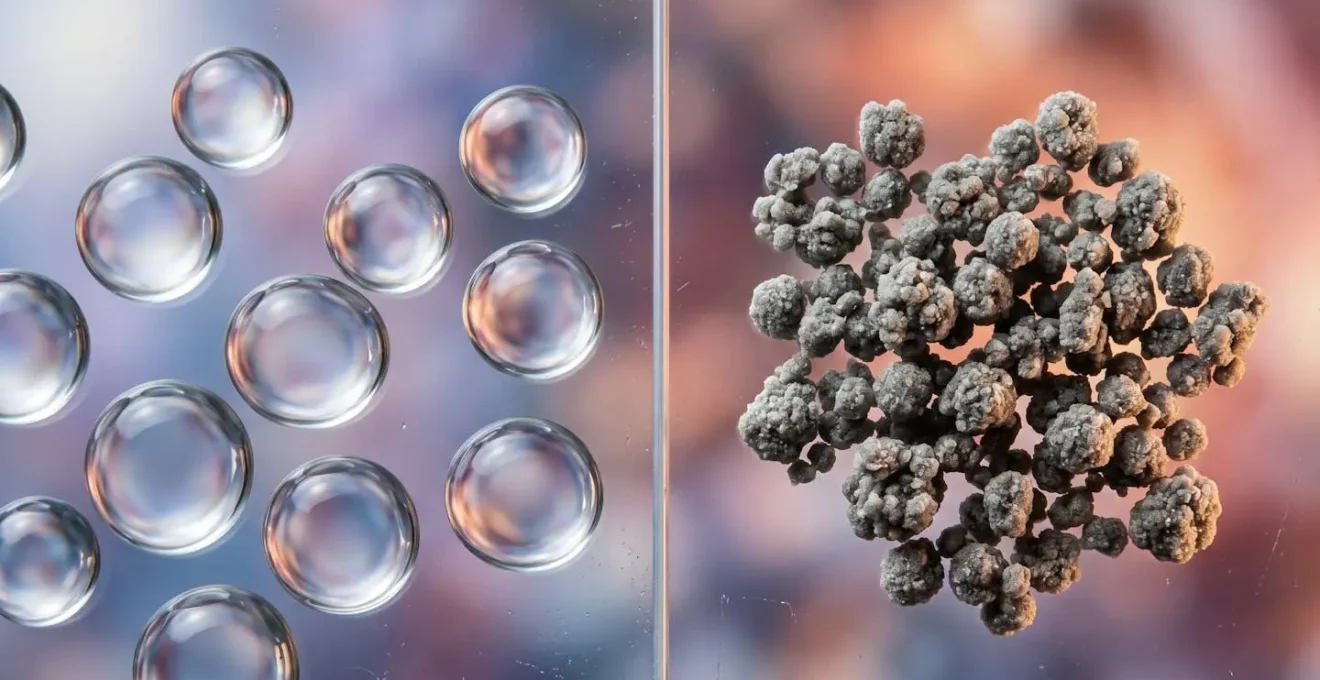
So how do you know which type you have? A standard lipid panel doesn’t tell you. While you can get a specialized NMR LipoProfile test, a powerful clue is hidden in your standard results. As the research team at the Cooper Institute noted, you can use a simple ratio. The research team at the Cooper Institute states:
The triglyceride/HDL ratio is a stronger predictor of insulin resistance and of LDL particle size than other conventional lipoprotein measures.
– Research team at the Cooper Institute, The Blood Triglyceride:HDL Ratio study
A high triglyceride-to-HDL ratio is a strong indicator of insulin resistance and is highly correlated with the dangerous small, dense LDL pattern. This shifts the focus from just lowering LDL to improving your overall metabolic health—specifically, lowering triglycerides and raising HDL, which often involves managing carbohydrate intake and increasing healthy fats and exercise.
The CoQ10 Depletion: Why Statins Cause Muscle Pain in Some Users?
Statins are incredibly effective at lowering LDL cholesterol and are a cornerstone of modern cardiovascular medicine. However, a significant number of users report a debilitating side effect: statin-associated muscle symptoms (SAMS), which can include pain, weakness, and cramping. This is a major concern for the target audience, who may be hesitant to start medication due to these potential issues. Understanding the mechanism behind this side effect is key to managing it and making informed decisions with your doctor.
One of the primary mechanisms through which statins work is by inhibiting an enzyme called HMG-CoA reductase. This enzyme is a crucial step in the body’s cholesterol production pathway. However, this same pathway is also responsible for producing several other vital compounds, most notably Coenzyme Q10 (CoQ10). CoQ10 is a powerful antioxidant and a critical component for energy production within the mitochondria—the “powerhouses” of our cells. Muscle cells, which have very high energy demands, are particularly rich in mitochondria and heavily reliant on CoQ10.
When you take a statin, you don’t just reduce cholesterol synthesis; you also inadvertently reduce your body’s production of CoQ10. Indeed, a prospective study published in Archives of Neurology found a 34% reduction in CoQ10 after just a few weeks of atorvastatin treatment. This depletion can lead to mitochondrial dysfunction, impairing the ability of muscle cells to produce energy efficiently and potentially causing the pain and weakness associated with SAMS.
This understanding has led to significant research into CoQ10 supplementation. A major 2018 meta-analysis of twelve randomized controlled trials, summarized as a case study in the Journal of the American Heart Association, found that CoQ10 supplementation significantly improved muscle pain, weakness, and cramps in patients on statins. This suggests that for some individuals, supplementing with CoQ10 could be a viable strategy to mitigate these side effects, allowing them to continue with life-saving statin therapy. It’s a crucial conversation to have with your healthcare provider if you experience SAMS.
Which 3 Soluble Fiber Sources Bind Cholesterol Best in the Gut?
While “eat more fiber” is common advice, it’s the type of fiber that truly matters for cholesterol management. Specifically, viscous soluble fiber is a superstar. This type of fiber dissolves in water to form a thick, gel-like substance in your digestive tract. This gel has a powerful, direct impact on your cholesterol levels through a clever biological mechanism. It binds to bile acids, which your liver produces from cholesterol to help digest fats. By trapping these bile acids, the fiber ensures they are excreted from your body rather than being reabsorbed.
This forces your liver into action. To make new bile acids, it must pull LDL cholesterol from your bloodstream, effectively clearing it out. It’s a natural and highly effective process. According to Mayo Clinic research, consuming just 5-10 grams of soluble fiber daily can decrease your LDL cholesterol. While many foods contain soluble fiber, some sources are particularly potent due to their high viscosity and gel-forming capacity.
The following table ranks some of the top sources of soluble fiber based on their viscosity and proven cholesterol-lowering mechanisms, giving you a clear guide to the most effective choices.
| Fiber Source | Mechanism | Viscosity Level | Daily Target | LDL Reduction |
|---|---|---|---|---|
| Beta-Glucans (Oats, Barley) | Forms viscous gel that binds bile acids, forcing liver to pull cholesterol from blood to make new bile | High | 3-4g per serving | 5-10% |
| Psyllium Husk | Exceptional gel-forming capacity increases bile acid excretion and blocks dietary cholesterol absorption | Very High | 10g per 1000 kcal | 5-10% |
| Pectin (Apples, Citrus) | Soluble fiber that binds cholesterol in digestive tract and slows gastric emptying | Moderate-High | Found in 1-2 whole fruits | 5-8% |
| Glucomannan (Konjac Root) | Highest water-absorbing capacity among fibers, forms extremely viscous gel to trap cholesterol and bile | Extremely High | 2-4g before meals | 10-15% |
Focusing on incorporating these specific foods—a bowl of oatmeal in the morning, an apple for a snack, or adding psyllium husk to a smoothie—is a tactical way to actively lower your cholesterol. The key is the consistency and the focus on these high-viscosity fibers that act as natural cholesterol binders in your gut.
ApoB vs. LDL: Which Marker Actually Predicts Your Heart Attack Risk?
If LDL-C (the total amount of cholesterol in your LDL particles) is an imperfect measure of risk, what’s a better alternative? Enter Apolipoprotein B, or ApoB. This is emerging as the gold standard for assessing cardiovascular risk because it solves the “motorcycles vs. trucks” problem we discussed earlier. Every single atherogenic particle—including the dangerous small, dense LDL, VLDL, and IDL particles—contains exactly one molecule of ApoB. Therefore, measuring your ApoB level gives you a direct count of the total number of potentially plaque-forming particles in your bloodstream.
Think of it this way: LDL-C measures the total number of passengers (cholesterol molecules) in all the vehicles (LDL particles). ApoB measures the total number of vehicles. It’s the number of vehicles, not the number of passengers, that causes the traffic jam in your arteries. You can have a “normal” LDL-C level but a high ApoB, meaning you have a large number of small, dense LDL particles, each carrying very little cholesterol. This is a common and often-missed high-risk scenario, especially in people with insulin resistance or metabolic syndrome. As experts in functional medicine point out, ApoB provides a more precise picture.
The Lamkin Clinic Functional Medicine Team clearly articulates this point:
ApoB directly measures the atherogenic particle count that the TG/HDL ratio predicts indirectly; it is the most precise cardiovascular risk measure when particle analysis is needed.
– The Lamkin Clinic Functional Medicine Team, Triglyceride/HDL Ratio clinical interpretation guide
Knowing your ApoB number empowers you to have a much more sophisticated conversation with your doctor about your true risk. It moves beyond a single, often misleading, number and helps tailor dietary and lifestyle interventions more effectively. If your ApoB is high, the goal becomes lowering the particle number, a task for which strategies like the Portfolio Diet and improving insulin sensitivity are exceptionally well-suited. Advocating for this test can be a crucial step in taking control of your health.
Your Action Plan: Questions to Ask Your Doctor About ApoB Testing
- Could you order an ApoB test alongside my standard lipid panel to get a more accurate picture of my cardiovascular risk?
- My LDL cholesterol is [your number], but what is my actual ApoB particle number, and how does that change my risk assessment?
- Given that I have signs of insulin resistance/metabolic syndrome, would ApoB be a better marker for me to track than LDL-C alone?
- If my ApoB is elevated despite a normal LDL-C, what dietary strategies beyond just ‘lowering cholesterol’ should I focus on?
- How often should I monitor my ApoB levels, and what is the target range I should aim for based on my overall cardiovascular risk factors?
The Invisible Damage High Insulin Does to Your Arteries Before Diagnosis
The final piece of the cholesterol puzzle often has little to do with fat and everything to do with sugar and insulin. Chronically high levels of insulin, a condition known as hyperinsulinemia, is a powerful driver of inflammation and arterial damage. This often occurs for years or even decades before blood sugar levels rise enough to trigger a diagnosis of pre-diabetes or type 2 diabetes. This “invisible” period is when significant damage can occur.
When you frequently consume refined carbohydrates and sugary foods, your body releases large amounts of insulin to shuttle glucose out of the blood and into cells. Over time, your cells can become resistant to insulin’s signal, forcing your pancreas to pump out even more. This high-insulin environment is profoundly inflammatory. A revealing 2023 study in *Frontiers in Pharmacology* showed that high insulin promotes a pro-inflammatory response in immune cells, leading to elevated inflammatory markers like TNF-α and IL-6. This directly contributes to endothelial dysfunction—damage to the delicate inner lining of your arteries.
This damage is the initial injury that calls the cholesterol “firefighters” to the scene. Furthermore, high insulin tells the liver to ramp up its production of triglycerides, which promotes the formation of the dangerous small, dense LDL particles. It’s a triple threat: high insulin increases inflammation, damages arteries, and worsens the quality of your cholesterol particles. This is why a person can have “normal” cholesterol numbers but still be at high risk for a heart attack if they have underlying hyperinsulinemia.
This connection underscores why managing blood sugar and insulin is a non-negotiable part of any modern cholesterol-lowering strategy. It’s not about eliminating carbs entirely, but about choosing them wisely (high-fiber, whole-food sources) and employing strategies to blunt their impact on your blood sugar. By keeping insulin levels low and stable, you directly reduce the inflammatory burden on your arteries, making your body a less hospitable place for atherosclerotic plaque to form.
Key Takeaways
- Cholesterol is a repair molecule dispatched by the liver in response to arterial inflammation; managing inflammation is key.
- Focus on food quality, especially specific soluble fibers (oats, psyllium) and the “Portfolio Diet,” rather than just low-fat restriction.
- Your ApoB particle count and Triglyceride/HDL ratio are more accurate predictors of heart risk than your total LDL-C number.
How to Regulate Glucose Spikes Without Giving Up Carbs Entirely?
The idea of managing insulin and glucose might sound like it requires giving up carbohydrates, but that’s a common misconception. The goal isn’t elimination, but regulation. By being strategic about how and when you eat carbohydrates, you can significantly flatten your glucose and insulin curves, reducing inflammation and improving your metabolic health without sacrificing this important macronutrient. Several evidence-based strategies can be easily incorporated into your daily routine.
One of the most powerful hacks is food sequencing. The order in which you eat the components of your meal has a dramatic effect on your post-meal glucose response. By starting your meal with fiber (from vegetables) and protein, you create a fibrous mesh in your digestive tract that slows down the absorption of carbohydrates you eat afterwards. Another simple yet effective tool is vinegar. Consuming a tablespoon of vinegar in water or as a salad dressing before a carb-heavy meal has been shown to improve insulin sensitivity and lower the subsequent glucose spike.
Here are several practical strategies to help you manage glucose without giving up the foods you love:
- Food Sequencing Hack: Always begin your meal with non-starchy vegetables and a protein source before you touch any bread, pasta, or rice.
- The Vinegar Strategy: Drink 1-2 tablespoons of apple cider vinegar diluted in a glass of water or use it in a vinaigrette on a pre-meal salad.
- Cinnamon Addition: Add 1-2 teaspoons of cinnamon to your coffee, yogurt, or oatmeal to help improve your cells’ sensitivity to insulin.
- Healthy Fat Pairing: Never eat a “naked carb.” Always pair carbohydrates with a healthy fat like avocado, nuts, or olive oil to slow down digestion and blunt the glucose response.
- Optimize the Second Meal Effect: A low-glycemic, high-fiber breakfast (like oatmeal with nuts and berries) has been shown to improve your glucose response not just to breakfast, but to lunch several hours later.
Finally, while healthy fats are your friend, it’s still wise to be mindful of certain types. Therapeutic lifestyle guidelines from trusted sources like the Mayo Clinic suggest that keeping your saturated fat intake moderate is a prudent part of an overall heart-healthy diet. For instance, keeping saturated fat to less than 7% of daily calories can contribute to a reduction in LDL. This isn’t about fear, but about balance—prioritizing monounsaturated and polyunsaturated fats while enjoying saturated fats from whole-food sources in moderation.
Your journey to better heart health starts not with restriction, but with informed, strategic additions to your plate. By shifting your focus from a war on fat to a mission of reducing inflammation, managing insulin, and choosing powerful, functional foods, you can lower your cholesterol effectively and sustainably. Start applying these principles today and have a more empowered conversation with your doctor about what your cholesterol numbers truly mean for your health.