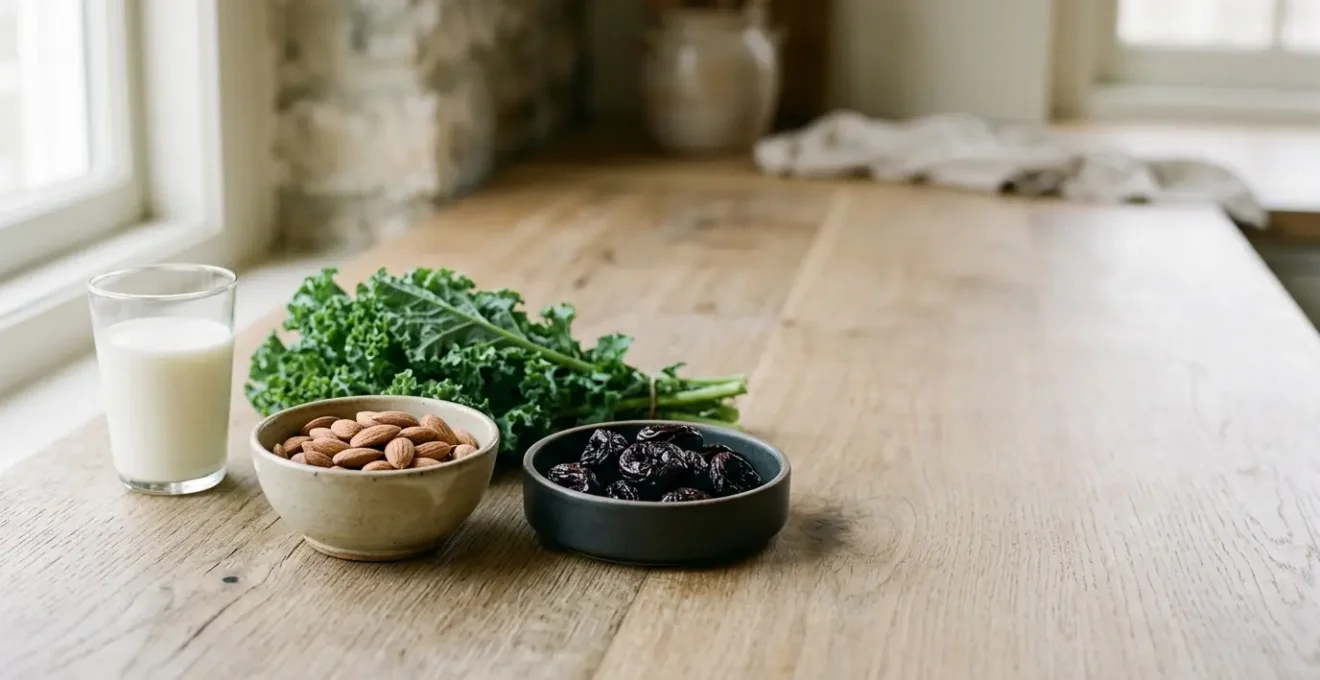
True bone strength is built on a synergistic “skeletal ecosystem,” not just isolated nutrients like calcium and vitamin D.
- Nutrient partnerships, like vitamin D with magnesium, are non-negotiable for proper mineral absorption and bone cell regulation.
- Bone health is compromised by hidden “metabolic saboteurs,” including common heartburn medications and the effects of high blood sugar.
Recommendation: Focus on a holistic strategy that combines bioavailable nutrients from whole foods, eliminates dietary and medicinal disruptors, and incorporates specific balance and impact exercises to build a resilient, fracture-proof skeleton.
For many post-menopausal women, a diagnosis of osteopenia can feel like a frightening countdown to fractures and frailty. The conventional path often points directly to medication, a solution that, while necessary for some, can feel like a passive approach to a deeply personal health journey. You’re told to take calcium and vitamin D, but the conversation frequently stops there, leaving you wondering if there’s more you can do to actively reclaim your skeletal health. This narrow focus overlooks a fundamental truth: our bones are not inert scaffolding but a dynamic, living tissue that is constantly being remodeled.
The common advice to simply add more calcium is a platitude that ignores the intricate web of factors governing bone health. It fails to account for nutrient synergies, bioavailability, and the hidden saboteurs in our diet and medicine cabinet that can silently undermine our efforts. What if the key isn’t just about adding more building blocks, but about creating the right environment for them to be used effectively? This is the core of building a resilient skeletal ecosystem—a holistic system where nutrition, hormones, and lifestyle work in concert to create bones that are not just dense, but also strong and flexible.
This guide moves beyond the basics. We will explore the critical nutrient partnerships that unlock your body’s bone-building potential, identify specific foods with powerful, research-backed benefits, and uncover common lifestyle factors that either fortify or fail your bones. By adopting this integrative perspective, you can shift from a place of fear to one of empowerment, equipped with the knowledge to build a stronger skeleton for the decades to come.
To navigate this holistic approach, we have structured this guide to address the most critical and often-overlooked aspects of natural bone fortification. The following sections will provide detailed, evidence-based strategies to build your skeletal resilience from the inside out.
Summary: A Holistic Framework for Natural Bone Fortification
- Why Taking Vitamin D Without Magnesium Is Useless for Your Bones?
- How Many Prunes Per Day Does It Take to Prevent Bone Loss?
- Milk vs. Kale: Which Calcium Source Is Better Absorbed by the Body?
- The Heartburn Medication That Increases Your Fracture Risk by 30%
- Which Collagen Type Is Best for rebuilding the Bone Matrix?
- Tart Cherries vs. 3mg Pills: Which Melatonin Source Is Safer?
- Bio-Identical vs. Synthetic Hormones: What Is the Safety Difference?
- How to Fortify Your Skeletal System Against Fractures Before Age 60?
Why Taking Vitamin D Without Magnesium Is Useless for Your Bones?
For decades, Vitamin D has been hailed as a cornerstone of bone health, essential for calcium absorption. Many women diligently take their supplements, believing they are protecting their skeletons. However, a crucial piece of the puzzle is often missing: magnesium. Without sufficient magnesium, your body simply cannot properly metabolize and utilize vitamin D. It acts as a master cofactor, required to convert the storage form of vitamin D (calcidiol) into its active form (calcitriol) in the kidneys. Taking high doses of vitamin D without adequate magnesium can even deplete your body’s magnesium stores, paradoxically worsening your mineral balance.
This nutrient synergy goes even deeper, directly influencing the bone remodeling process itself. Bone health is a delicate dance between osteoclasts (cells that break down old bone) and osteoblasts (cells that build new bone). Magnesium plays a vital role in orchestrating this dance. As researchers have pointed out, its presence is critical for maintaining a healthy balance between bone resorption and formation.
Magnesium is a key regulator of the balance between osteoclast and osteoblast differentiation in the presence of vitamin D₃.
– Mammoli F, Castiglioni S, et al., International Journal of Molecular Sciences – Frontiers in Endocrinology 2024
Therefore, thinking of Vitamin D in isolation is a flawed strategy. To build a robust skeletal ecosystem, you must ensure this foundational partnership is in place. Focus on magnesium-rich foods like leafy greens, nuts, seeds, and dark chocolate. If you supplement with Vitamin D, it is imperative to consider co-supplementation with a well-absorbed form of magnesium, such as magnesium glycinate or malate, to ensure you are truly supporting your bones and not just straining your system.
How Many Prunes Per Day Does It Take to Prevent Bone Loss?
Beyond the usual suspects of calcium and vitamin D, emerging research points to a surprisingly powerful, and often overlooked, ally in the fight against bone loss: the humble prune. Far from being just a remedy for digestive regularity, prunes are packed with a unique combination of vitamins, minerals, and phenolic compounds that have a direct, positive effect on bone metabolism. They are a rich source of Vitamin K, potassium, boron, and copper, all of which play synergistic roles in the bone-building process. More importantly, their antioxidant and anti-inflammatory properties appear to down-regulate the activity of osteoclasts, the cells responsible for bone breakdown.
The question then becomes, how many do you need to eat to see a real benefit? A growing body of evidence provides a clear and attainable answer. For post-menopausal women with osteopenia, a daily serving of just a handful of prunes can make a measurable difference. In fact, a landmark study confirmed that consuming just 50 grams (about 4-6 prunes) daily prevented the loss of total hip bone mineral density over a 12-month period compared to a control group. This offers a simple, food-based strategy to help preserve bone mass where it counts most.
The practical application of this research is compelling, as demonstrated by a significant clinical trial that provides a real-world example of this principle in action. This study solidifies the role of prunes not just as a supplement, but as a primary nutritional tool for skeletal preservation.
Penn State Prune Study: Bone Structure Preservation Through Prune Consumption
A 12-month randomized controlled trial with 235 postmenopausal women at Penn State found that consuming 4-6 prunes daily maintained bone density, bone strength, and preserved bone structure at the tibia. Women in the control group experienced decreased bone mass density and strength, while those eating prunes preserved cortical bone structure—a key factor in resisting fractures. This demonstrates that a small, consistent dietary change can have a profound impact on maintaining the architectural integrity of your bones.
Milk vs. Kale: Which Calcium Source Is Better Absorbed by the Body?
The mantra “drink your milk for strong bones” is deeply ingrained in our culture. Dairy is widely promoted as the premier source of calcium, and its high calcium content per serving seems to support this claim. However, the most important question isn’t how much calcium a food contains, but how much your body can actually absorb and use—a concept known as bioavailability. This is where the narrative becomes much more interesting, and where certain plant-based sources reveal a surprising advantage. Factors like the presence of inhibitors (such as oxalates and phytates) and enhancers (like vitamin K) can dramatically affect how much calcium makes it from your plate into your bones.
When comparing milk to a low-oxalate green vegetable like kale, the data challenges conventional wisdom. While milk contains more total calcium, the percentage absorbed is significantly lower. In fact, compelling research published in The American Journal of Clinical Nutrition demonstrated that calcium absorption from kale averaged 40.9% compared to just 32.1% from milk. This means that while a cup of milk provides more *total* absorbable calcium due to its higher starting amount, the efficiency of absorption from kale is far superior. This highlights that a varied, plant-rich diet can be an exceptionally effective way to build your calcium stores.
To make informed choices for your skeletal ecosystem, it’s crucial to look beyond the headline number on a nutrition label and consider the full bioavailability matrix. The following table breaks down how different food sources compare in terms of their usable calcium content.
| Food Source | Calcium Content (mg per serving) | Bioavailability (%) | Absorbable Calcium (mg) | Key Nutrient Co-factors |
|---|---|---|---|---|
| Kale (1 cup cooked) | 94 | ~41% | ~39 | Vitamin K1, low oxalates |
| Cow’s Milk (1 cup) | 306 | ~32% | ~98 | Vitamin D, Phosphorus, K2 (grass-fed) |
| Spinach (1 cup cooked) | 245 | ~5% | ~12 | High oxalates (inhibitor) |
| Broccoli (1 cup cooked) | 62 | ~27% | ~17 | Vitamin K1, low oxalates |
| Source: NIH Office of Dietary Supplements, 2024; American Journal of Clinical Nutrition | ||||
This doesn’t mean you must eliminate dairy, but it powerfully illustrates that a diet rich in low-oxalate greens like kale, broccoli, and bok choy is a highly efficient way to nourish your bones. Diversifying your calcium sources is a cornerstone of building a resilient skeletal system.
The Heartburn Medication That Increases Your Fracture Risk by 30%
Building a strong skeletal ecosystem isn’t just about what you add to your diet; it’s also about identifying and removing what may be silently sabotaging it. One of the most significant and often-overlooked culprits is a class of common heartburn medications known as Proton Pump Inhibitors (PPIs). Drugs like omeprazole, lansoprazole, and esomeprazole are widely prescribed and available over-the-counter to reduce stomach acid. While effective for severe acid reflux, their long-term use is associated with a substantially increased risk of bone fractures—by some estimates, as much as 30% or more.
The mechanism behind this is twofold. Firstly, these drugs create a state of hypochlorhydria, or low stomach acid. Stomach acid is absolutely essential for ionizing and absorbing key minerals, including calcium and magnesium. Without adequate acid, these minerals cannot be properly extracted from your food, regardless of how well you eat. Secondly, the body’s response to suppressed acid production can disrupt the delicate hormonal balance that governs bone remodeling. This disruption can impair bone health from multiple angles, affecting not just mineral absorption but the entire cellular process.
As experts in the field have explained, the impact is systemic, affecting minerals, hormones, and even muscle strength, all of which contribute to a higher likelihood of fractures. This is a crucial point that a holistic approach to bone health must address.
Increased gastrin production and hypochlorhydria are the two main mechanisms that affect bone remodeling, mineral absorption, and muscle strength, contributing to increased fracture risk among PPI users.
– Wong SN, Chin KY, et al., International Journal of Environmental Research and Public Health, 2019
If you are taking a PPI long-term for manageable heartburn, it is critical to discuss this risk with your doctor. Exploring alternative strategies, such as dietary modifications, stress management, or other medications, could be a vital step in protecting your bones. Never stop a prescribed medication without medical guidance, but opening this conversation is a proactive step toward safeguarding your skeletal future.
Which Collagen Type Is Best for rebuilding the Bone Matrix?
When we talk about bone health, we often fixate on minerals like calcium, which provide hardness and density. But this is only half the story. Bones are a composite material, much like reinforced concrete. The minerals are the cement, but the collagen matrix provides the flexible “rebar” that gives bones their resilience and ability to resist fracture. Roughly 90% of the organic matrix of bone is composed of Type I collagen. As we age, collagen production declines, leading to bones that are not just less dense, but also more brittle. Therefore, supporting your body’s own collagen production is a critical, yet often neglected, strategy for maintaining bone quality.
While many supplements offer pre-made collagen, a more effective and holistic approach is to provide your body with the essential cofactors it needs to synthesize its own high-quality collagen. This ensures the collagen is created and integrated where it’s needed most, including the bone matrix. Taking collagen peptides can be helpful, but it’s like delivering bricks to a construction site with no workers. Providing the cofactors is like equipping your internal construction crew with the tools they need to do their job properly. Without these key nutrients, endogenous (internal) collagen synthesis grinds to a halt.
The most important building blocks for this process are not exotic or hard to find. They are fundamental vitamins, minerals, and amino acids that work in synergy to weave the strong, flexible protein latticework of your bones. Ensuring an adequate supply of these nutrients is a non-negotiable part of any serious bone-building protocol.
- Vitamin C: A critical cofactor for enzymes that cross-link collagen fibers, giving them strength. Aim for 75-90mg daily from sources like citrus fruits, bell peppers, and berries.
- Zinc: Essential for the function of proteins and enzymes involved in collagen synthesis. Found in oysters, beef, and pumpkin seeds, with a daily target of 8-11mg.
- Copper: Activates an enzyme called lysyl oxidase, which is crucial for the final maturation of collagen and elastin fibers. Sources include shellfish, nuts, and organ meats (900mcg daily).
- Glycine: This amino acid makes up about one-third of collagen’s structure. Bone broth, gelatin, and meat are rich sources.
- Proline: The second most abundant amino acid in collagen, found in egg whites, dairy, and cabbage.
By focusing on a diet rich in these cofactors, you empower your body’s natural ability to rebuild and maintain a resilient bone matrix, leading to bones that are less likely to break, regardless of what a density scan might say.
Tart Cherries vs. 3mg Pills: Which Melatonin Source Is Safer?
Sleep is a pillar of health, and its connection to bone remodeling is profound. During deep sleep, the body performs critical repair work, and hormonal regulation, including the balance of bone-building and bone-resorbing hormones, is optimized. Melatonin, the “sleep hormone,” is a key player in this process. Beyond its role in regulating circadian rhythms, melatonin has been shown to have direct positive effects on bone by stimulating osteoblast formation and reducing oxidative stress. This has led many to consider melatonin supplements as a dual-purpose tool for better sleep and stronger bones.
However, the supplement market is notoriously unregulated. Studies have shown that the actual dosage in melatonin pills can be wildly inconsistent with what’s stated on the label. Research has revealed that some melatonin supplements contain over 400% of the advertised dose, while others contain significantly less. This lack of quality control poses a safety concern, as high, unmonitored doses can lead to next-day grogginess and potential disruption of natural hormone cycles.
This is where turning to whole-food sources offers a safer, more holistic alternative. Tart cherries are one of the richest natural sources of melatonin. Unlike a synthetic pill that delivers a single, high-dose spike, the melatonin in tart cherries comes packaged with a complex array of other beneficial compounds, including potent anti-inflammatory agents called anthocyanins. These compounds work synergistically to reduce systemic inflammation, which is another known driver of bone loss. Consuming a small glass of tart cherry juice or a handful of dried tart cherries before bed can gently support your body’s natural melatonin levels, promoting better sleep and providing anti-inflammatory benefits without the risks associated with unregulated supplements.
Bio-Identical vs. Synthetic Hormones: What Is the Safety Difference?
The decline in estrogen following menopause is the single greatest accelerator of bone loss for women. Consequently, hormone replacement therapy (HRT) is a powerful intervention for preserving bone density. However, the conversation around HRT is fraught with confusion and fear, largely stemming from older studies on synthetic hormones. Understanding the profound difference between synthetic and bio-identical hormones is essential for making an informed and safe decision.
The key distinction lies at the molecular level. Bio-identical hormones, such as estradiol and progesterone, have a chemical structure that is identical to the hormones produced by the human body. Synthetic hormones, like those derived from pregnant horse urine (e.g., Premarin), are structurally different. This difference is not trivial; it dictates how the hormone interacts with receptors in your body and, crucially, how it is metabolized and broken down. The body has evolved specific pathways to process its own hormones. When a foreign, synthetic molecule is introduced, it can produce metabolites with unknown or potentially harmful long-term effects. This is the crux of the safety debate.
An expert-led, individualized approach is paramount. The goal of modern hormone therapy is not to simply replace what’s lost with a generic dose, but to restore optimal physiological balance based on comprehensive testing. Functional tests like the DUTCH (Dried Urine Test for Comprehensive Hormones) can reveal not only your hormone levels but also how your body is metabolizing them. This allows a practitioner to tailor a precise dose of bio-identical hormones, ensuring you get the bone-protective benefits while minimizing potential risks. This is a world away from the one-size-fits-all approach of the past.
Key Takeaways
- Bone health is an ecosystem: It depends on nutrient synergies (like Vitamin D + Magnesium), not isolated supplements.
- Focus on bioavailability: The amount of a nutrient your body can actually absorb (e.g., from kale) is more important than the total amount listed on a label (e.g., in milk).
- Identify and remove saboteurs: Long-term use of certain medications (like PPIs for heartburn) and high blood sugar (causing AGEs) can actively damage bone quality.
How to Fortify Your Skeletal System Against Fractures Before Age 60?
While nutritional strategies build the raw materials for strong bones, it is targeted movement that provides the stimulus for those materials to be integrated into a resilient, fracture-proof structure. For post-menopausal women, preventing fractures is a two-part equation: building stronger bones and preventing the falls that break them. This requires a combination of impact exercise to trigger bone remodeling and balance training to improve stability and neuromuscular control.
Impact, or weight-bearing, exercise is the signal that tells your osteoblasts to get to work. Activities like brisk walking, jogging, dancing, and strength training create mechanical stress on the skeleton, prompting it to lay down new bone tissue to become stronger. This process is known as osteogenic loading. But density is only half the battle. We now understand that bone *quality* is just as important. One major threat to bone quality is the accumulation of Advanced Glycation End-products (AGEs), sticky compounds that form when sugar attaches to proteins, like collagen. Research shows that AGEs make bone collagen stiff and brittle, increasing fracture risk even with normal bone mineral density. A diet low in processed sugars is therefore a direct strategy for maintaining flexible, resilient bones.
Alongside building better bones, enhancing your proprioception—your body’s sense of its position in space—is the most effective way to reduce fall risk. Simple, consistent practice can dramatically improve your balance and stability, making you less likely to suffer a fall in the first place. This type of training is not about high-intensity effort, but about mindful, controlled movements that retrain the connection between your brain and your body.
Your Action Plan: Proprioception and Balance Training for Fracture Prevention
- Single-Leg Balance Stands: Practice standing on one leg for 30-60 seconds, 3 times per side, twice daily. To progress, try closing your eyes or standing on an unstable surface like a cushion.
- Tai Chi Practice: Engage in 30-45 minute sessions 2-3 times per week. Its slow, controlled movements are proven to enhance proprioception and can reduce fall risk by up to 43%.
- Heel-to-Toe Walking: Walk in a straight line, placing the heel of one foot directly in front of the toes of the other for 20 steps. Repeat this 3 times daily to improve your gait stability.
- Yoga Balance Poses: Incorporate poses like Tree Pose, Warrior III, and Half Moon into your routine 2-3 times weekly. Hold each pose for 30-60 seconds per side to challenge your stability.
- Dynamic Weight Shifting: While standing, practice controlled weight transfers from side-to-side and forward-to-backward. Do 10 repetitions in each direction daily to improve reactive balance.
By integrating these nutritional insights and lifestyle interventions, you are not just fighting bone loss; you are actively building a more resilient, vibrant, and empowered future. Your next step is to translate this knowledge into a personalized plan with a qualified healthcare provider.
Frequently Asked Questions About Hormones and Bone Health
What is the molecular difference between bio-identical and synthetic hormones?
Bio-identical hormones (like estradiol) have the exact same molecular structure as hormones produced naturally by the human body. Synthetic hormones (like Premarin, derived from horse urine) have different molecular structures, which can lead to different interactions with hormone receptors and produce different metabolites that the body must process.
How do hormone metabolites affect long-term safety?
The body breaks down hormones through specific metabolic pathways. Synthetic hormones can produce metabolites with unknown or potentially harmful long-term effects—this is central to the safety debate. Bio-identical hormones follow natural metabolic pathways the body is designed to handle, potentially reducing risks of adverse effects.
What testing is recommended before hormone therapy for bone health?
Neither bio-identical nor synthetic hormones should be used without proper functional testing. The DUTCH (Dried Urine Test for Comprehensive Hormones) test is recommended to assess baseline hormone levels and their metabolic pathways. This allows for personalized dosing and monitoring, shifting from a generic approach to expert-led, individualized hormone optimization.