True air quality isn’t achieved by a single device, but by a systemic approach combining source control, calibrated filtration, and strategic ventilation.
- HEPA filtration is non-negotiable for capturing physical particles like micro-plastics and allergens.
- Activated carbon is a critical, separate component required to adsorb harmful gases (VOCs) that HEPA filters cannot.
- The CADR (Clean Air Delivery Rate) of a purifier must be calculated for your room’s specific volume to ensure efficacy without excessive noise.
Recommendation: Begin by identifying and minimizing the sources of pollution in your home before investing in any filtration hardware.
For city dwellers and those with environmental sensitivities, the air inside our homes has become a primary health concern. It’s an invisible battleground of allergens, pollutants from outside, and an increasing load of airborne micro-plastics shed from our own furniture, clothing, and electronics. The standard advice is often to simply “get an air purifier,” but this recommendation overlooks the fundamental physics of air cleaning and the diverse nature of indoor pollutants.
Most consumer-grade advice focuses on generic features, leading to mismatched hardware that provides a false sense of security. An undersized unit, a filter not designed for gaseous chemicals, or improper placement can render a sophisticated piece of technology nearly useless. The challenge is not a lack of technology, but a lack of systemic understanding.
But what if the key wasn’t just buying a better filter, but deploying it with technical precision? The true path to clean air lies in deconstructing the problem. It requires understanding the specific threats—from cognitive-damaging fine particulates to off-gassing chemicals—and applying the right hardware solution to each. It’s about treating your home as a controlled ecosystem, not just a room to be sanitized.
This guide provides a technician’s framework for air quality management. We will dissect the science behind particulate matter, explain how to properly size your equipment, compare core filtration technologies, and ultimately, build a comprehensive strategy to create a genuinely non-toxic indoor environment.
This article provides a detailed breakdown of the technical principles and practical steps for achieving superior indoor air quality. Explore the sections below to master each component of a truly effective air filtration strategy.
Summary: A Technical Breakdown of Air Filtration Systems
- Why Fine Particulate Matter Is Lowering Your Cognitive Score?
- How to Calculate the CADR Rating Needed for Your Living Room?
- HEPA vs. Ionic: Which Purifier Does Not Create Harmful Ozone?
- The “Fresh Air” Smell That Might Be Damaging Your Lungs
- Where to Position Your Air Purifier for Maximum Sleep Protection?
- Why Your New Sofa Smells Like Chemicals (And Why It Matters)?
- Nasal vs. Mouth Breathing: Which One Increases Oxygen Uptake?
- How to Create a Non-Toxic Ecosystem in Your Home for Better Air Quality?
Why Fine Particulate Matter Is Lowering Your Cognitive Score?
The most dangerous airborne threats are those you cannot see. Fine particulate matter, specifically PM2.5 (particles smaller than 2.5 micrometers), is not just an irritant for the lungs; it is a neurotoxin. Due to their minuscule size, these particles can bypass the body’s natural defenses, enter the bloodstream, and travel throughout the body, including to the brain. This is not a theoretical risk; it is a documented physiological mechanism with severe consequences for long-term cognitive health.
The Pathway to the Brain: How Inhaled Particles Cause Neurological Damage
An international study published in PNAS discovered that inhaled fine particles enter the bloodstream after crossing the air-blood barrier in the lungs. From there, they eventually reach the brain and actively damage the critical blood-brain barrier. Once inside the brain, these particles are retained for far longer periods than in other organs. Data suggests that up to eight times more fine particles may reach the brain via this bloodstream route from the lungs than through direct entry via the nasal passage, highlighting the systemic danger of polluted air.
The accumulation of these foreign particles in brain tissue incites neuroinflammation, a state of chronic immune response that is a known precursor to neurodegenerative diseases. The link is direct and quantifiable. A 2025 meta-analysis published in Nature Aging confirmed that chronic exposure to PM2.5 is associated with a minimum 14% increased risk of dementia. This isn’t just a concern for the elderly; the cumulative damage begins decades earlier, slowly degrading cognitive function, memory, and processing speed over time.
Effectively filtering these particles from your indoor environment is therefore not an act of comfort, but one of essential neurological preservation. The hardware and strategies discussed in this guide are designed specifically to capture these invasive PM2.5 particles before they have a chance to enter your body and begin this damaging cascade.
How to Calculate the CADR Rating Needed for Your Living Room?
The Clean Air Delivery Rate (CADR) is the single most important technical specification for an air purifier. It is a standardized measurement, certified by the Association of Home Appliance Manufacturers (AHAM), that quantifies the volume of filtered air a unit can deliver in a given time. A higher CADR means faster cleaning, but selecting a unit is not as simple as “bigger is better.” Proper sizing requires a precise calculation to balance performance, energy use, and acoustic comfort.
The core objective is to achieve a sufficient number of Air Changes per Hour (ACH) for your specific room. ACH indicates how many times the entire volume of air in a room is filtered within one hour. For general health, a minimum of 3 ACH is recommended. However, for households with allergies, pets, or high pollution, this target increases significantly. In fact, the CDC’s ‘Aim for 5’ guidance recommends a minimum of 5 ACH to effectively reduce airborne pathogen and allergen concentrations.
To calculate the minimum CADR for your space, follow a simple two-thirds rule. First, measure your room’s area in square feet (length × width). Then, multiply that area by 0.67. For a 15 ft x 20 ft living room (300 sq ft), the calculation would be 300 × 0.67 = 201. This means you need a purifier with a minimum CADR of 201. However, this calculation is for the unit’s maximum speed, which is often too loud for continuous operation. For real-world, quiet use, it is wise to select a unit with a CADR 1.5x to 2x higher than your minimum requirement, allowing it to run effectively at lower, quieter fan speeds.
A properly sized unit is the foundation of effective air filtration. An undersized purifier will constantly struggle to keep up with incoming pollutants and particle generation within the room, while an oversized unit provides a buffer to handle high-particle events (like cooking or vacuuming) and ensures quiet, efficient operation day and night.
HEPA vs. Ionic: Which Purifier Does Not Create Harmful Ozone?
The air purifier market is dominated by two primary technologies: mechanical filtration (HEPA) and electronic purification (ionic). While both claim to clean the air, their methods and, more importantly, their byproducts are fundamentally different. From a technical and safety standpoint, only one is suitable for a non-toxic home ecosystem: HEPA.
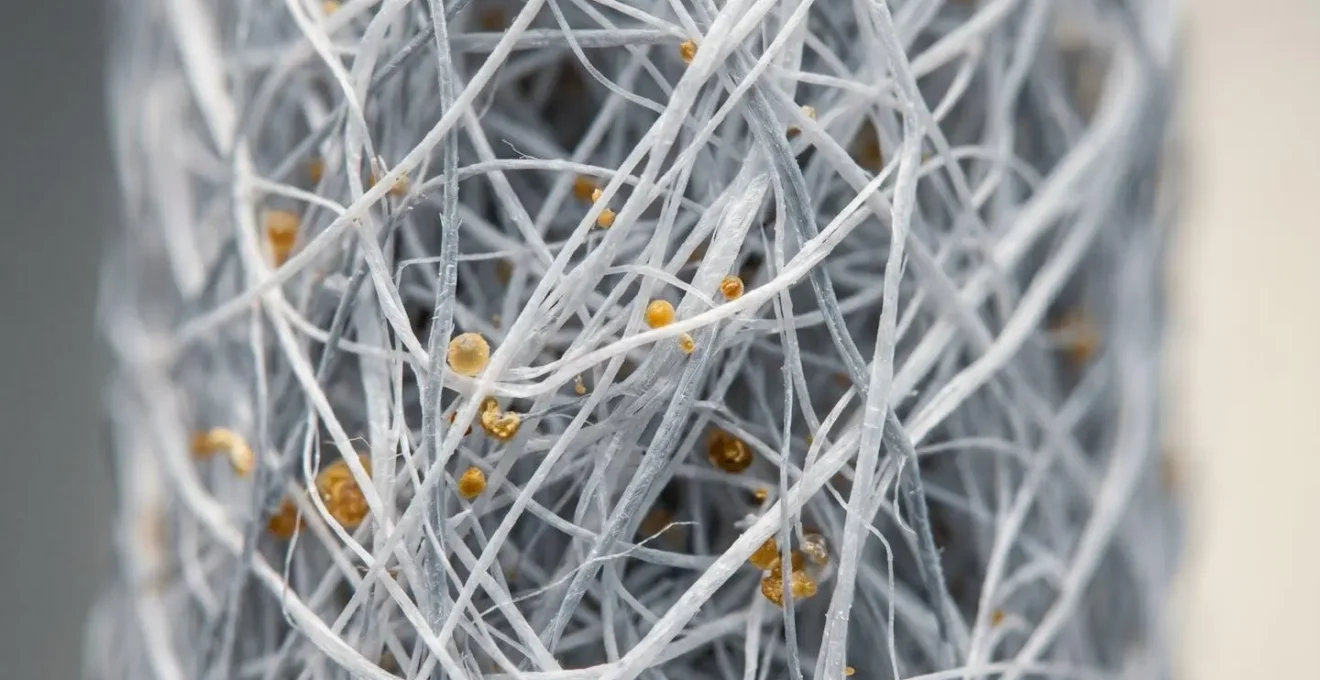
A True HEPA (High-Efficiency Particulate Air) filter is a passive, mechanical medium. It is a dense, web-like mat of fine fibers that physically traps particles as air is forced through it. It is rated to capture 99.97% of particles as small as 0.3 microns. It does not alter the chemistry of the air; it simply removes physical contaminants. This process generates zero harmful byproducts, making it unequivocally safe for continuous use, even for sensitive individuals.
This paragraph introduces the complex structure of a HEPA filter. To understand its effectiveness, it is useful to visualize its core components. The illustration below provides a macroscopic view of this intricate filtration process.
Ionic purifiers, or ionizers, work on an active electronic principle. They emit charged ions that attach to airborne particles, causing them to become heavy and fall out of the air or stick to surfaces like walls and furniture (the “black wall effect”). The critical flaw in this design is that the high-voltage process used to create these ions can also split oxygen molecules (O2), which can then reform into ozone (O3), a highly reactive and toxic gas. Ozone is a known lung irritant that can worsen asthma and other respiratory conditions. Even models marketed as “low-ozone” or “ozone-free” can still produce it, making them an unacceptable risk in a closed indoor environment.
The following table, based on an analysis of air filtration standards, breaks down the core technical differences.
| Feature | HEPA Purifiers | Ionic Purifiers |
|---|---|---|
| Filtration Method | Passive mechanical trapping through dense fiber mesh | Active ionization that electrically charges particles |
| Ozone Production | Zero ozone generation | Can produce ozone as byproduct, even in ‘ozone-free’ models |
| Particle Capture Efficiency | 99.97% of particles ≥0.3 microns | Variable; particles may stick to walls instead of being removed |
| Safety Certification | Look for true HEPA certification | Must have CARB (California Air Resources Board) certification |
| Side Effects | None; completely safe for continuous use | Potential lung irritation from ozone; ‘black wall’ effect from charged particles |
The “Fresh Air” Smell That Might Be Damaging Your Lungs
Many people associate a sharp, “clean” or “electric” smell with purified air. This is a dangerous misconception. That distinct odor is often the smell of ozone (O3), a toxic gas and lung irritant produced by some types of air purifiers, particularly ionizers and ozone generators. True clean air is defined by the complete absence of odor, not the presence of a chemical one.
The sharp, ‘electric’ smell of ozone is dangerously misleading in a home environment. True clean air has no smell—the complete absence of odor signifies air free of both pollutants and masking fragrances.
– Indoor Air Quality Researchers, Air Quality Research and Standards
This confusion is compounded by the fact that our indoor environments are a concentrated soup of pollutants. We bring contaminants in from outdoors, and we generate more from within through cooking, cleaning, and the off-gassing of our furniture and electronics. The result is a toxic environment where pollutants can accumulate to dangerous levels. In fact, the EPA states that indoor air pollutants can be up to 5x more concentrated than what is found outdoors.
Masking these pollutants with fragrances from candles, sprays, or plug-in fresheners only adds another layer of chemicals, primarily Volatile Organic Compounds (VOCs), to the air we breathe. It’s the equivalent of spraying perfume in a sewer; it doesn’t remove the source of the problem. An effective air quality strategy is about removal, not masking. The goal is to achieve a state of neutrality—air that is free from both harmful particulates and chemical odors, whether they come from a pollutant source or a “fresh scent” product.
Therefore, a critical sensory check for your environment is to aim for a complete lack of smell. If your “purifier” is adding a scent to the room, it is not cleaning the air; it is polluting it. A high-performance system based on HEPA and activated carbon filtration works silently and odorlessly to remove contaminants, leaving behind nothing but neutral, breathable air.
Where to Position Your Air Purifier for Maximum Sleep Protection?
Deploying an air purifier is a tactical decision. Its placement determines its effectiveness, particularly in the bedroom, where we spend a third of our lives and where air quality has a direct impact on restorative sleep. The objective is to create a continuous “clean air bubble” within your personal breathing zone, which requires understanding airflow dynamics, not just placing the unit in a corner.
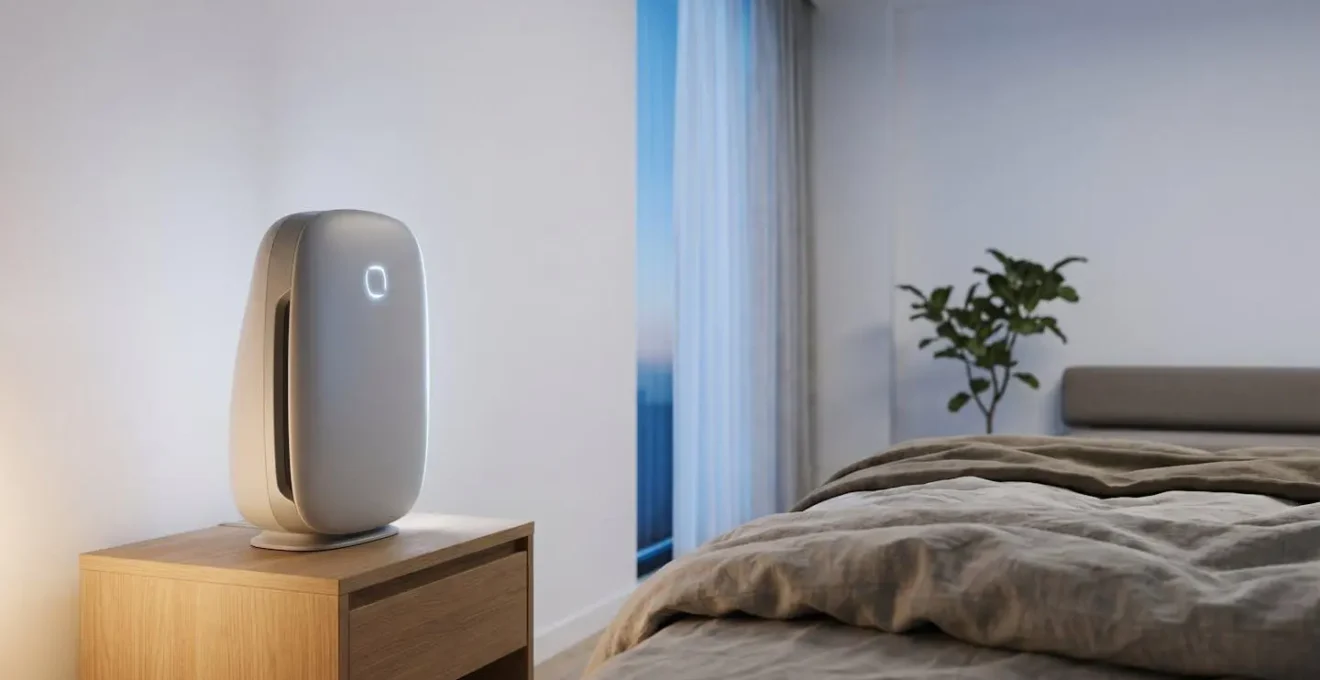
The optimal strategy involves both placement and timing. The unit should be positioned to create a gentle, consistent circulation pattern that draws in contaminated air and expels clean air toward your sleeping area. Avoid placing it right next to the bed, as the direct airflow and noise can disrupt sleep. Instead, place it across the room and a few feet away from walls or furniture to ensure unimpeded 360-degree air intake.
This serene bedroom scene illustrates the ideal setup for nighttime air purification. The careful placement ensures maximum particle capture in the breathing zone while maintaining a tranquil, sleep-conducive environment.
To maximize protection during sleep, follow this operational protocol:
- Establish a breathing zone: Position the purifier 6-10 feet away from the bed, ideally on a nightstand or similar surface 3-5 feet off the floor. This targets the air you actually breathe, rather than just the air at floor level.
- Create a clean air current: Aim the purifier’s airflow towards the sleeping area. This ensures a steady supply of filtered air reaches you throughout the night.
- Conduct a ‘Pre-Sleep Purge’: About 30-60 minutes before bed, run the purifier on its highest setting. This rapidly clears the room of particles stirred up by evening activities and settling from bedding.
- Prioritize continuous, quiet filtration: Before sleeping, switch the unit to its lowest, quietest setting. Continuous low-speed filtration is far more effective at maintaining clean air overnight than intermittent high-speed bursts.
This strategic deployment ensures that the air in your most critical personal space is constantly being scrubbed of allergens, micro-plastics, and other particulates. It transforms the purifier from a passive appliance into an active component of your sleep hygiene, directly contributing to better respiratory health and deeper, more restorative rest.
Why Your New Sofa Smells Like Chemicals (And Why It Matters)?
That “new furniture smell” is not a sign of freshness; it is the smell of chemical off-gassing. Synthetic materials used in modern furniture, from foam cushions to polyester fabrics and treated woods, release Volatile Organic Compounds (VOCs) into your home. These airborne chemicals, including formaldehyde, benzene, and flame retardants, contribute significantly to indoor air pollution and can cause a range of health issues, from headaches and dizziness to long-term systemic damage.
At the same time, this furniture is a primary source of indoor micro-plastics. The synthetic fabrics—polyester, nylon, acrylic—shed microscopic fibers through normal wear and tear. Every time you sit on your sofa, you are releasing a plume of these tiny plastic particles into the air. These particles remain suspended for hours, ready to be inhaled deep into your lungs.
This creates a dual-threat scenario that requires a dual-filtration solution. A standard HEPA filter is a master at capturing physical particles like micro-plastics, dust, and pollen. However, it is completely ineffective against gaseous pollutants like VOCs. The molecules of these chemicals are too small to be trapped by the HEPA fiber matrix and will pass right through.
The smell is from Volatile Organic Compounds (VOCs) off-gassing, while the physical degradation of synthetic fabric over time is a primary source of airborne microplastic fibers in the home. An activated carbon filter is critical to adsorb harmful gases that a HEPA filter alone cannot capture.
– Indoor Air Quality Specialists, Air Quality and Indoor Pollution Research
To address this, an effective air purifier must contain a substantial activated carbon filter. Activated carbon works through a process called adsorption, where the vast, porous surface area of the carbon traps and holds gas and odor molecules. A system that combines both a HEPA filter for particles and an activated carbon filter for gases is the only way to comprehensively address the full spectrum of pollutants originating from sources like a new sofa.
Nasal vs. Mouth Breathing: Which One Increases Oxygen Uptake?
While mechanical filtration is a cornerstone of clean indoor air, our own biology provides a powerful, built-in pre-filtration system: the nasal passages. The way we breathe directly impacts both the quality of the air that reaches our lungs and our body’s ability to use oxygen. The science is definitive: nasal breathing is superior to mouth breathing in every significant metric.
When you breathe through your nose, the air is warmed, humidified, and filtered. The intricate structures and mucus lining of the nasal passages trap larger particles like dust and pollen before they can penetrate deeper into the respiratory system. This biological first line of defense works in perfect synergy with a high-quality HEPA purifier. By reducing the overall concentration of airborne particles, the purifier lessens the burden on the nasal passages, which can in turn reduce congestion and make nasal breathing easier.
Case Study: The Virtuous Cycle of Mechanical and Biological Filtration
Medical research demonstrates that nasal breathing functions as the body’s natural pre-filter system. This biological process works synergistically with HEPA air purifiers. When airborne allergen concentrations are reduced by mechanical filtration, nasal congestion often decreases, making nasal breathing easier to maintain. This creates a virtuous cycle: easier nasal breathing provides better natural filtration of remaining particles while also increasing the body’s production of Nitric Oxide. This crucial molecule, produced in the sinuses, is a powerful vasodilator that relaxes blood vessels, improving circulation and enhancing oxygen delivery throughout the body.
Mouth breathing, in contrast, bypasses this entire system. It delivers cold, dry, unfiltered air directly to the lungs, increasing irritation and the risk of infection. It also fails to generate Nitric Oxide, resulting in less efficient oxygen uptake in the blood. For city dwellers in polluted environments, consciously practicing nasal breathing is a critical health habit. It ensures that the air—which you have already cleaned with a purifier—undergoes a final, vital stage of biological conditioning before it reaches your lungs.
This synergy highlights the importance of a holistic approach. An air purifier cleans the environment, which enables better breathing habits, which in turn maximizes the health benefits of that cleaner air. It’s a powerful intersection of technology and physiology.
Key Takeaways
- Fine particulate matter (PM2.5) is a neurotoxin that can cross the blood-brain barrier, increasing the risk of cognitive decline and dementia.
- Effective filtration requires a dual system: True HEPA filters for physical particles (micro-plastics, allergens) and activated carbon for gaseous pollutants (VOCs).
- A systemic approach combining source control, calibrated filtration, and strategic ventilation is vastly superior to relying on a single device.
How to Create a Non-Toxic Ecosystem in Your Home for Better Air Quality?
Achieving truly clean indoor air is not about a single magic bullet. It’s about implementing a robust, multi-layered system. A technician’s approach to air quality rests on a simple but powerful trinity framework: Source Control, Filtration, and Ventilation. By addressing all three, you create a resilient, non-toxic ecosystem that actively manages pollutants rather than passively reacting to them.
Filtration, which we have covered in detail, is only one piece of the puzzle. Without controlling pollutants at their origin and flushing out stale air, even the best purifier will be fighting a losing battle. Source control is the most impactful first step: by choosing non-toxic materials and being mindful of activities that generate particles, you drastically reduce the initial load on your filtration system.
Ventilation acts as a crucial reset button, preventing the buildup of CO2 and other pollutants that filtration alone cannot handle. Together, these three pillars form a comprehensive strategy for maintaining a healthy indoor environment. The following plan outlines how to implement this trinity framework in a practical, step-by-step manner.
Your Action Plan: The Source-Filter-Ventilate Trinity Framework
- Source Control (Priority 1): Scrutinize new purchases. Choose furniture with low-VOC certifications like GREENGUARD or CertiPUR-US. Opt for natural fiber textiles (cotton, wool, linen) over synthetics (polyester, nylon) to minimize the shedding of micro-plastic fibers.
- Filter (Priority 2): Deploy HEPA air purifiers correctly sized for each room using the CADR calculation. Critically, ensure your chosen units also contain a substantial activated carbon filter to capture VOCs that HEPA filters miss.
- Ventilate (Priority 3): Make it a daily habit to open windows for 10-15 minutes, even in winter. This strategic “purge ventilation” flushes out stale air and prevents the accumulation of pollutants that technology can’t address.
- Add a Critical Partner Tool: Use a sealed-system HEPA vacuum. Standard vacuums often exhaust fine particles back into the air. A sealed HEPA model traps these particles, preventing them from becoming airborne again.
- Consider a Budget-Friendly Powerhouse: Build or buy a Corsi-Rosenthal Box. This DIY air filter, made from four MERV-13 furnace filters and a box fan, has been shown in tests to deliver a very high CADR (400+ CFM) for under $100, rivaling commercial units that cost many times more.
By shifting from a device-centric mindset to a systemic one, you can take definitive control over your indoor environment. Start today by auditing your home for pollution sources and implementing this three-tiered strategy to build a healthier, truly non-toxic living space.