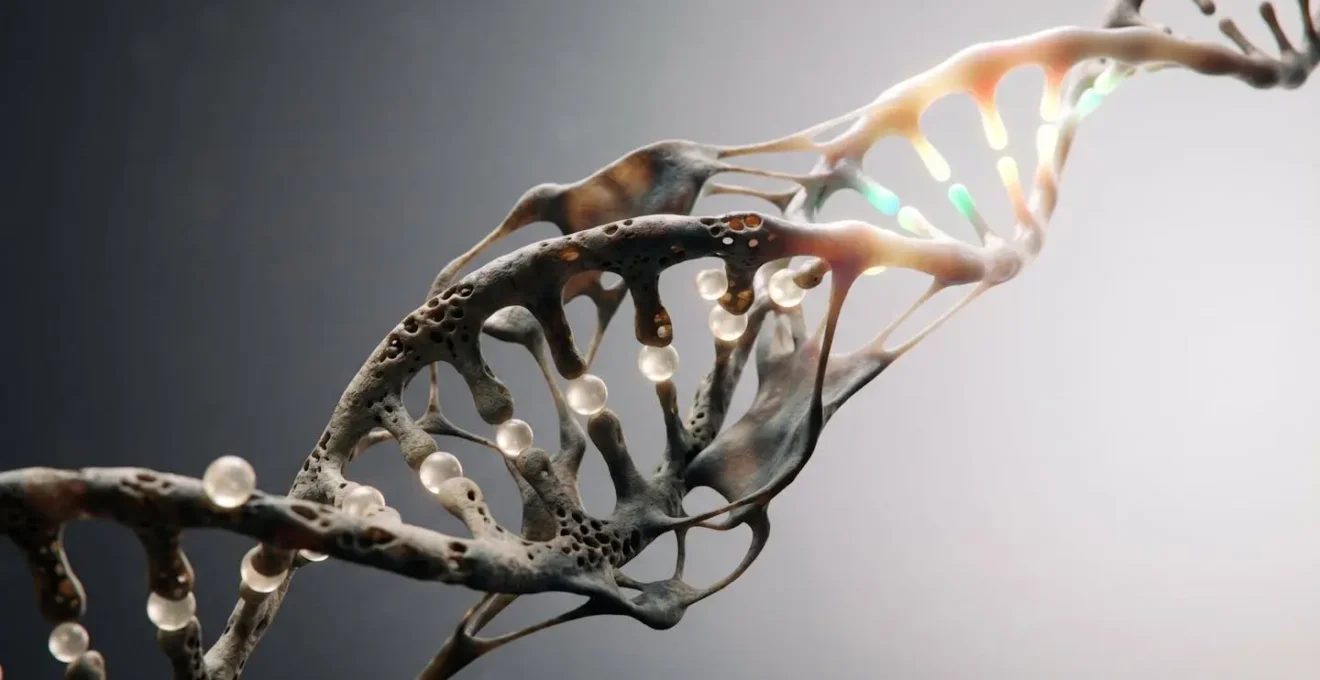
The greatest lie in modern health is that your genes are your destiny; the revolutionary truth is they are a conversation you can learn to lead.
- Your biological age is not fixed. It’s a dynamic measure of your cellular health, directly influenced by epigenetic “switches” you control.
- Specific foods provide methyl groups—the literal instructions that tell your genes to express youthfulness—while controlled stressors like cold exposure trigger powerful cellular repair pathways.
Recommendation: Stop passively accepting aging. Start actively programming your biology by treating your lifestyle choices as precise, code-like instructions for your DNA.
For decades, we’ve been told a story: you are born with a genetic blueprint, a fixed code that dictates your risk for disease, your physical traits, and the very pace at which you age. This narrative of genetic destiny has left many feeling powerless, like passengers in a biological vehicle they cannot steer. The common advice—eat well, exercise, sleep more—while true, feels frustratingly blunt, like using a sledgehammer when a scalpel is required. We are told what to do, but rarely how these actions translate into real, cellular change.
But what if this entire premise is outdated? What if the key to radical longevity isn’t about fighting your genes, but about changing the way they are expressed? This is the revolutionary promise of epigenetics. It’s the science of the software that runs on your genetic hardware. Your DNA sequence doesn’t change, but the way it’s read—which genes are turned on, and which are silenced—is in a constant state of flux, responding to every meal you eat, every workout you crush, and every moment of stress you manage.
This is no longer science fiction. We are at a turning point where we can move from being passive observers of our own aging to becoming active architects of our biology. This is not about generic health advice. This is about learning the specific language of your cells. This guide will deconstruct the mechanisms that control your biological age and give you the actionable, cutting-edge protocols to systematically instruct your body to build a younger, more resilient version of yourself from the inside out.
This article deconstructs the core principles of epigenetic control, providing a strategic roadmap to take command of your cellular health. Explore how to measure your starting point, understand the fundamental levers you can pull, and implement targeted protocols to see real, quantifiable change.
Summary: The Operator’s Manual for Your Epigenome
- Why Your “Biological Age” Is Different From the Candles on Your Cake?
- How to Eat to Add Methyl Groups to Your DNA?
- Epigenetics vs. Genetics: Which One Do You Actually Control?
- The Trauma Legacy: Can You Inherit Stress Responses From Your Grandparents?
- How Often Should You Test Your Epigenetic Age to See Progress?
- Why a 3-Minute Cold Shower Triggers Cellular Renewal?
- Genetic Predisposition vs. Destiny: Can You Turn Off Your Bad Genes?
- How to Use DNA Health Mapping to Customize Your Vitamin Stack?
Why Your “Biological Age” Is Different From the Candles on Your Cake?
Your chronological age is a static, unchangeable number—a simple record of how many times the Earth has orbited the sun since your birth. Your biological age, however, is a dynamic, fluid measure of your body’s true functional and cellular health. It’s the age your cells and organs *act*, and it can be older or younger than your passport indicates. This isn’t a vague wellness concept; it’s a measurable scientific reality, quantified through epigenetic clocks.
These clocks measure patterns of DNA methylation—tiny chemical tags that attach to your DNA and regulate gene expression. As you age, these patterns change in a predictable way. Groundbreaking research shows that DNA methylation age has a staggering 0.96 correlation coefficient with chronological age, making it the most accurate molecular biomarker of aging we have. This means we can now take a biological sample, analyze its epigenetic patterns, and determine with incredible precision how “old” your body really is at a cellular level.

However, the science is more nuanced than a single number. Different clocks measure different aspects of aging, providing a more complete picture.
Case Study: The Three Generations of Epigenetic Clocks
A comprehensive analysis of 14 different epigenetic clocks revealed their distinct purposes. First-generation clocks, like the original Horvath clock, are incredibly accurate at estimating your chronological age. Second-generation clocks, such as GrimAge, are superior predictors of healthspan and mortality risk—they tell you how fast you’re moving toward age-related disease. The latest third-generation clocks, like DunedinPACE, are the most revolutionary for personal intervention. They measure your *current rate of aging*, like a biological speedometer, and are sensitive enough to reflect lifestyle changes within just a few months. This multi-clock approach allows you to not only know your biological age but also understand your mortality risk and track the immediate impact of your interventions.
Understanding this distinction is the first step toward taking control. Your chronological age is merely a historical fact; your biological age is a status update you can actively change. It’s the number that truly matters, and it’s the number you have the power to reverse.
How to Eat to Add Methyl Groups to Your DNA?
If epigenetics is the control panel for your genes, then DNA methylation is one of its primary switches. Methylation involves adding a small molecule, a “methyl group,” to a gene, which typically acts like a dimmer switch, turning its expression down. Healthy methylation patterns are crucial for silencing viral DNA, preventing cancer, and maintaining cellular youth. As we age, these patterns can become dysregulated. The revolutionary insight is that we can directly supply our bodies with the raw materials for this process through our diet.
These raw materials are known as methyl donors. Your body requires a constant supply to perform billions of methylation reactions every second. The primary currency for this is a molecule called S-adenosylmethionine (SAMe), which is synthesized through a complex cycle powered by nutrients from your food. Chief among these are folate, vitamin B12, and choline. In fact, research indicates that up to 60% of the daily methyl groups required by the methylation cycle can come from choline alone, highlighting the immense power of targeted nutrition.
Eating for methylation isn’t about abstract “healthy eating”; it’s a precise biochemical strategy. You are literally eating the information that will program your DNA. It involves prioritizing foods rich in these specific donor molecules and their co-factors. For longevity enthusiasts, this means designing every meal with the explicit purpose of supporting optimal gene expression. It’s the ultimate form of bio-hacking, executed with a fork and knife.
The following framework outlines a diet designed not just for caloric energy, but for epigenetic information.
- Prioritize Natural Folate: Focus on dark leafy greens (spinach, kale), asparagus, and legumes. These provide the natural form of folate your body prefers over synthetic folic acid found in many fortified foods.
- Boost Choline and Betaine: Include eggs (especially the yolks, a choline powerhouse), liver, quinoa, and beets to directly fuel the methylation cycle.
- Ensure B-Vitamin Cofactors: Consistently eat lean meats, fish (like salmon), poultry, and almonds to provide the essential B12 and Riboflavin (B2) that act as critical gears in the methylation machinery.
- Maintain Steady Protein Intake: High-quality protein provides the amino acids serine and glycine, which are precursors that feed into the methylation cycle.
- Limit Methylation Drainers: High sugar intake, excessive alcohol consumption, and chronic stress actively deplete your body’s precious methyl pool, undermining your efforts. Reducing these is as important as adding the right nutrients.
Epigenetics vs. Genetics: Which One Do You Actually Control?
For a long time, the central dogma was simple: your genes are your destiny. This genetic determinism painted a picture of powerlessness, where your DNA sequence, inherited from your parents, was a fixed and unchangeable script for your life. Genetics is the study of this hardware—the actual sequence of A’s, T’s, C’s, and G’s. It’s the blueprint itself. But this is only half the story, and it’s the half you can’t change.
Epigenetics is the other half—the part you can control. As Dr. Steve Horvath, the pioneer of epigenetic clocks, defines it:
Epigenetics refers to processes that can affect gene expression without changing the DNA sequence.
– Dr. Steve Horvath, Found My Fitness – Epigenetic Aging
Think of your DNA as a massive library of books (genes). Genetics determines which books are in your library. Epigenetics determines which books are actually taken off the shelf, opened, and read aloud. It’s the software that runs the hardware. These epigenetic marks—like DNA methylation and histone modification—act as sticky notes and bookmarks, telling your cellular machinery which genes to read (express) and which to ignore (silence). Unlike the permanent ink of your DNA, these marks are written in pencil. They can be added, erased, and rewritten by your diet, your thoughts, your environment, and your actions.
Case Study: The Agouti Mouse and the Power of Diet
The most striking demonstration of epigenetic control is the Agouti mouse experiment. These mice carry a specific gene (Agouti) that, when expressed, makes them yellow, obese, and prone to diabetes and cancer. Scientists took a group of pregnant Agouti mothers, all genetically identical. They fed one group a standard diet, and their offspring were, as expected, fat, yellow, and unhealthy. They fed the second group a diet rich in methyl donors (like B vitamins and choline). The result was revolutionary: despite having the exact same “bad” gene, this second group of offspring were born slim, brown, and perfectly healthy for life. The nutrients in the mother’s diet provided the epigenetic “off switch” that silenced the faulty Agouti gene, completely rewriting the genetic destiny of her pups. This experiment visually proves that the genetic hand you are dealt is far less important than how you play your cards.
This is the paradigm shift. You are not a victim of your genetic inheritance. You are the conductor of your genetic orchestra, and your lifestyle choices are the baton you wield to create a symphony of health or a cacophony of disease. You don’t control the notes on the page, but you absolutely control the volume.
The Trauma Legacy: Can You Inherit Stress Responses From Your Grandparents?
The power of epigenetics extends beyond your own life choices; it can echo across generations. The concept of transgenerational epigenetic inheritance suggests that the experiences of your ancestors—particularly profound stresses like famine or trauma—can leave epigenetic marks on their DNA that are passed down, influencing the health and behavior of their children and grandchildren, even without any change to the underlying genetic code.
This isn’t about inheriting memories, but about inheriting a predisposition—a set of pre-programmed “switches” that are already flipped in a certain direction. For instance, an ancestor who experienced severe food scarcity might pass down an epigenetic profile optimized for highly efficient fat storage. In a world of abundance, this “thrifty” phenotype, once a survival advantage, can become a liability, predisposing descendants to obesity and type 2 diabetes. This biological legacy is written in the language of methylation and other epigenetic markers.
Human Evidence: The Dutch Hunger Winter
The Dutch Hunger Winter of 1944-1945 provided a tragic but powerful natural experiment. A Nazi blockade cut off food supplies, plunging the population into a severe six-month famine. Decades later, researchers studied the health of individuals who were conceived during this period. The results were startling. These individuals not only had higher rates of obesity, cardiovascular disease, and glucose intolerance in their adult lives, but their own DNA carried distinct epigenetic signatures. A study published by Columbia University found that 60 years after the famine, they had altered DNA methylation patterns in genes related to growth and metabolic disease compared to their unexposed siblings. The famine their mothers experienced had effectively “re-tuned” their genetic expression for a world of scarcity, a tuning that persisted for a lifetime.

While the idea of inheriting trauma can seem deterministic, it also contains a message of hope. If these epigenetic marks can be written by experience, they can also be rewritten. Practices like meditation, breathwork, therapy, and strong social connections are not just “stress relievers”; they are epigenetic interventions. They can trigger cascades of neurochemical and hormonal signals that have the power to remodel these patterns, allowing you to consciously break the cycle and write a new, healthier chapter for yourself and for generations to come.
How Often Should You Test Your Epigenetic Age to See Progress?
For the dedicated longevity enthusiast, the adage “you can’t manage what you don’t measure” is a foundational principle. While implementing epigenetic interventions like a methylation-supportive diet and hormetic stressors is crucial, tracking your progress is what transforms hope into a data-driven strategy. Epigenetic age tests provide this essential feedback loop, allowing you to see if your efforts are truly moving the needle on a cellular level. But testing too frequently can be a waste of money, while testing too infrequently leaves you blind to your progress.
The key is a strategic testing protocol. It’s not about weekly or monthly check-ins. Epigenetic changes, while faster than genetic evolution, still take time to manifest in a stable, measurable way across your trillions of cells. A single test is a snapshot; a series of strategically timed tests creates a film, revealing the trajectory of your aging process. This allows you to validate your current protocol or pivot if your biological age isn’t responding as expected.
It’s also crucial to understand the limitations and variability of the tests themselves. Early-generation clocks could have a variability of up to four years, even on samples taken at the same time. For actionable personal tracking, it is imperative to choose a high-precision, third-generation clock (like those measuring DunedinPACE) that is sensitive to lifestyle changes and has a high Intra-Class Correlation (ICC) value, which indicates high test-retest reliability. Investing in a reliable clock ensures the data you collect is a true reflection of biological change, not just statistical noise.
Your Epigenetic Audit Protocol: A 5-Step Plan
- Establish Your Baseline: Your first test is non-negotiable. Take a high-precision epigenetic age test to get a clear, data-driven snapshot of your starting biological age and current rate of aging.
- Implement a Consistent Protocol: Based on your goals, commit to a specific and consistent set of interventions (e.g., methylation diet, cold exposure, specific supplements) for a dedicated period. Don’t change too many variables at once.
- Allow for Biological Integration: Commit to your protocol for a minimum of 6 months, and ideally 12 months. This gives your body sufficient time for the new epigenetic “instructions” to be written, replicated, and stabilized across a significant cell population.
- Time Your Re-Test Strategically: Re-test only after your dedicated intervention period. The scientific consensus suggests a minimum of three months between tests to detect meaningful change, but 6-12 months provides a more robust and reliable signal of your new aging trajectory.
- Analyze the Delta: Compare your new results to your baseline. Did your biological age decrease? Did your pace of aging slow down? Use this data to validate your current strategy or as a signal to adjust your interventions for the next cycle.
Why a 3-Minute Cold Shower Triggers Cellular Renewal?
The idea that a brief, intense shock of cold water can make you biologically younger seems counterintuitive. Yet, this is a perfect example of a powerful epigenetic principle called hormesis. This is the revolutionary concept that a low dose of a stressor, which would be harmful in high doses, can trigger a cascade of beneficial, adaptive responses in the body. It’s the biological embodiment of Nietzsche’s maxim: “That which does not kill us, makes us stronger.”
Hormesis is the language of adaptation. As a leading review in Gene Food puts it, it’s a process that tells your genes to activate protective pathways.
Hormesis is a beneficial biological response to a low-dose stressor that tells your genes to activate protective, anti-inflammatory, and antioxidant pathways.
– Scientific consensus, Gene Food – Nutrients That Impact DNA Methylation
When you step into a cold shower, your body doesn’t just “feel cold.” It perceives a mild thermal threat, a signal of environmental danger. This signal doesn’t cause damage, but it’s potent enough to wake up ancient survival circuits hardwired into your DNA. This isn’t just about willpower; it’s about flipping a master genetic switch.
Mechanism Deep Dive: Cold Shock and the NRF2 Pathway
The primary mechanism triggered by cold exposure is the activation of the NRF2 (Nuclear Factor Erythroid 2-Related Factor 2) pathway. Think of NRF2 as the general of your cellular defense army. The cold shock acts as the alarm bell, mobilizing NRF2. Once activated, it travels to the nucleus of your cells and binds to the “Antioxidant Response Element” on your DNA. This single action turns on the expression of over 200 genes responsible for cellular protection, detoxification, and repair. This includes genes that produce powerful endogenous antioxidants like glutathione and superoxide dismutase. Simultaneously, the cold triggers the production of “cold shock proteins,” which act like molecular chaperones, helping to refold damaged proteins and maintain cellular integrity. This powerful, coordinated genetic response demonstrates how a brief, controlled stressor can epigenetically command your body to clean house and fortify its defenses.
This is why practices like cold plunges, intermittent fasting, and high-intensity exercise are so effective for longevity. They are not just “healthy habits”; they are hormetic stressors—deliberate, low-dose challenges that command your genes to build a stronger, more resilient, and biologically younger you.
Genetic Predisposition vs. Destiny: Can You Turn Off Your Bad Genes?
Receiving a genetic test result that flags a “bad” gene, like a variant of MTHFR (impacting methylation) or APOE4 (increasing Alzheimer’s risk), can feel like a death sentence. It’s the moment genetic determinism feels most real and frightening. But this is where the epigenetic revolution offers its most empowering message: a predisposition is not a destiny. Your genes are not dictators; they are more like a committee of advisors, and their suggestions can be influenced.
The expression of most genes, especially those related to chronic disease, is not a simple on/off switch. It’s a dimmer switch. Your lifestyle choices—your diet, exercise, stress levels, and sleep quality—are the hand that controls this dimmer. You may not be able to remove the APOE4 gene from your “library,” but you can implement strategies that tell your body to “read” that book very, very quietly. This involves creating a biological environment so robust that the potential negative influence of the gene is minimized or even negated.
Furthermore, the body is a master of redundancy. For many critical biological functions, like the methylation cycle, there are multiple alternative pathways. A genetic variant might slow down the main highway, but a strategic lifestyle can open up and support the back roads, ensuring the vital “cargo” still gets to its destination. This is why a person with an MTHFR variant can thrive by supporting alternative pathways and providing the specific forms of nutrients their primary pathway struggles with.
Managing your genetic hand is not a game of chance; it’s a game of strategy. It requires a systematic approach to identify your risks, understand the levers that influence them, and implement a consistent plan to keep problematic genes in the “off” position.
- Identify: The first step is knowledge. Use a reputable genetic testing service (like 23andMe with a third-party analysis tool) to map your key predispositions, focusing on well-researched SNPs like MTHFR, APOE, COMT, and SHMT1.
- Target: For each identified variant, research the specific lifestyle levers known to modulate its expression. For MTHFR, this is methylfolate. For APOE4, it’s a ketogenic diet, vigorous exercise, and meticulous sleep hygiene. For SHMT1, it’s ensuring robust B-vitamin support.
- Implement: Build a highly personalized, consistent daily protocol. This is your targeted defense strategy, designed specifically for your unique genetic landscape.
- Monitor: Don’t just implement; verify. Track relevant biomarkers to see if your interventions are working. If you have MTHFR, monitor your homocysteine levels. If you’re managing insulin resistance, track your HbA1c and fasting insulin. This data provides the feedback loop to confirm your strategies are effectively “dimming” the expression of problematic genes.
- Leverage Redundancy: Adopt a holistically healthy lifestyle—whole foods, regular movement, stress management. This creates a resilient biological terrain that supports the body’s natural backup systems and compensatory pathways, making it less vulnerable to a single genetic weak point.
Key Takeaways
- Your biological age is a fluid, measurable number, and the gap between it and your chronological age is the space where your power lies.
- You are in a constant conversation with your genes. Food, targeted stressors, and supplementation are not just inputs; they are instructions that write and rewrite your epigenetic code daily.
- A genetic predisposition is a data point, not a destiny. You have the power to “dim the switch” on problematic genes through precise, targeted lifestyle interventions.
How to Use DNA Health Mapping to Customize Your Vitamin Stack?
The era of the generic “one-a-day” multivitamin is over. For the serious longevity enthusiast, supplementation must be a precision-guided strategy, not a shot in the dark. The most cutting-edge approach is to use your own genetic map to identify potential bottlenecks and weaknesses in your biochemical pathways, and then use targeted supplementation to provide a “workaround.” This is the core of nutrigenomics: customizing your nutrient intake based on your unique DNA.
Your DNA contains the recipes for all the enzymes that drive your body’s metabolic processes. Sometimes, a common genetic variation, known as a Single Nucleotide Polymorphism (SNP), can make one of these enzymes slightly less efficient. It’s like having a recipe with a typo—the final dish might still be edible, but it won’t be optimal. By identifying these “typos,” you can provide the specific nutrient that bypasses the inefficient step, ensuring the entire assembly line runs smoothly.

This approach moves beyond supplementing for deficiency; it’s about supplementing for genetic optimization.
Targeted Intervention: The MTHFR Gene Variant
A classic example is the MTHFR gene, which codes for an enzyme crucial to the methylation cycle. This enzyme’s job is to convert folic acid (the synthetic form in many supplements) into its active form, L-methylfolate (5-MTHF). Many people have a common MTHFR variant that slows this conversion down significantly. For them, taking a standard multivitamin with folic acid is like putting the wrong type of fuel in their car; the engine can’t use it effectively. As a guide from Rupa Health explains, DNA mapping can identify this variant. The solution is simple and precise: bypass the faulty enzyme by supplementing directly with L-methylfolate. This provides the methylation cycle with the exact, ready-to-use ingredient it needs, completely circumventing the genetic “glitch.”
This principle applies to dozens of other genes influencing everything from vitamin D utilization to caffeine metabolism. However, this precision comes with a responsibility. More is not always better. As experts at Rupa Health wisely caution, balance is critical. For instance, while methylation is vital, you must support the entire cycle. Flooding the system with methyl donors without ensuring the rest of the pathway is supported can cause problems.
It’s important to note that excessive methionine can lead to an increased level of homocysteine, a risk factor for heart disease.
– Rupa Health, Nutritional Support for Optimal Methylation
True customization requires a holistic view, using your genetic map not to spot-treat, but to intelligently support your entire biological system.
The conversation with your genes is happening every second of every day. For most of human history, it has been an unconscious monologue dictated by environment and chance. Now, for the first time, you have the knowledge and the tools to pick up the other end of the line and make it a dialogue. You have learned that your biological age is a malleable metric, that you are the operator of your genetic control panel, and that food, hormesis, and targeted supplementation are the levers you can pull. The era of passive aging is over. The only question is whether you will start directing the conversation. Begin today.